Dresden chipmaker Sparxity closes Series A, taking total funding to $90 million
The TU Dresden spin-off, which renamed itself from SpiNNcloud last month, wants to build chips that skip the parts of an AI model that are not needed for a task. Lockheed Martin Ventures, GlobalFoundries and the EIC Fund are among the backers.
Sparxity, a Dresden company that designs computer chips and systems for AI and scientific computing, has closed its Series A round, bringing its total funding to $90 million (about EUR 80 million), according to The Next Web and EU-Startups. The company did not say how much of that total came from the Series A itself.
The round was led by ICM HPQC Fund, which invests in computing and quantum infrastructure. Lockheed Martin Ventures, the chipmaker GlobalFoundries, GS Futures, Cloudberry Ventures, TGFS and the EIC Fund also took part, Data Center Dynamics reports.
From brain-inspired chips to sparse AI
Sparxity was founded in 2021 as SpiNNcloud, a spin-off from TU Dresden. Its first systems were based on SpiNNaker2, a chip design inspired by the way the brain works. Last month the company changed its name to Sparxity to reflect its new focus on what it calls sparse-native computing, The Next Web writes.
The idea is simple to describe. Many modern AI models only use a small part of their network for each request. Conventional chips still move and process far more data than the task needs. Sparxity says its chips are designed to skip the parts that are not needed, which saves time and energy. With the new money it wants to develop chips for what it calls fine-grained dynamic sparsity, targeting AI inference up to 44 times faster in very sparse models, according to the company statement quoted by EU-Startups and DCD.
On today's systems, the company reports results such as 10 times faster sparse solvers, 18 times lower energy use for event-based machine learning and 20 times shorter runtimes for some optimisation problems. Sparxity notes that these figures apply to selected workloads. They are company claims and have not been independently benchmarked in the reports we reviewed.
Customers, chips and a T-Systems deal
Sparxity says it has completed three chip tapeouts, produced more than 70,000 chips and deployed 12 racks of its systems. It counts more than 30 customers, including some of the world's largest supercomputing centres, and says its revenue quadrupled between 2024 and 2025.
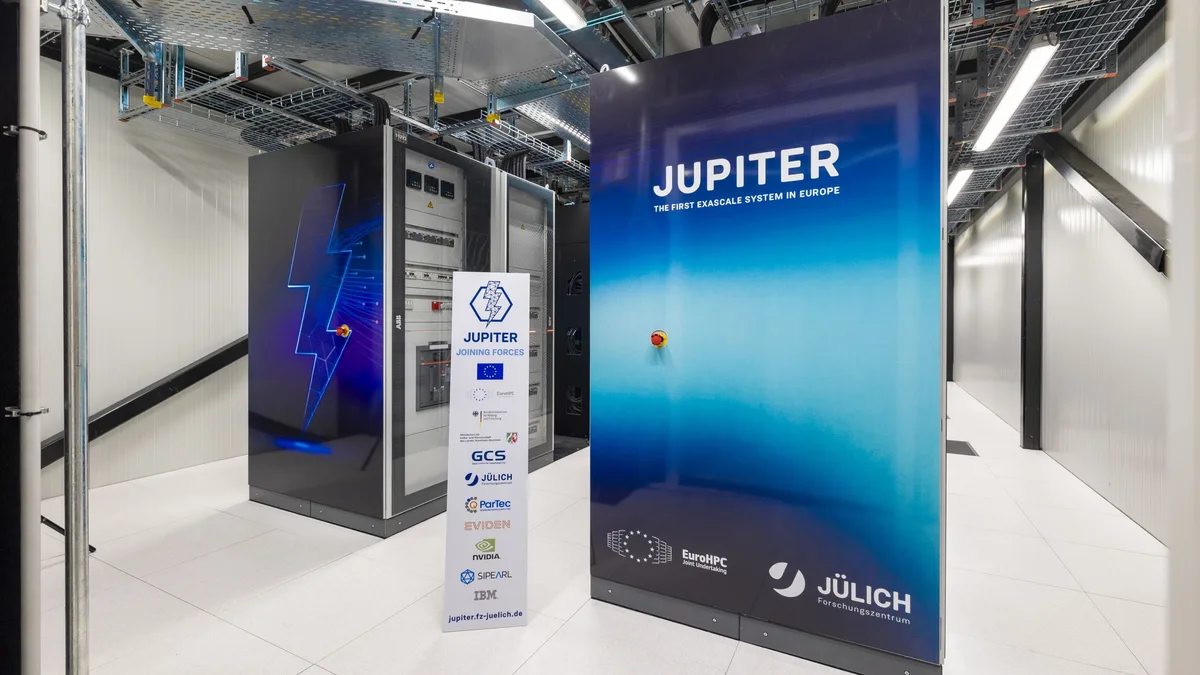
The funding follows two recent announcements. In October, Sparxity installed a system worth several million dollars at the Jülich Supercomputing Centre, part of Forschungszentrum Jülich and home of JUPITER, Europe's first exascale supercomputer. Last week it signed a letter of intent with T-Systems, the business customer arm of Deutsche Telekom, to bring its technology into T-Systems data centres, The Next Web reports.
The company has also had European public support before. In 2025 it was selected for the European Innovation Council's accelerator programme, which provided EUR 10 million in grants and equity, according to The Next Web and EU-Startups.
Who is behind the round
The investor list mixes financial and strategic backers. GlobalFoundries is one of the world's largest contract chip manufacturers, and Lockheed Martin Ventures is the venture arm of the US defence group. Angel investors include Richard Socher, founder of Recursive Superintelligence, and Nancy Xu, whose start-up Moonhub was bought by Salesforce. Atlantic and Silicon Catalyst continued their support.
Co-founder and chief executive Hector Gonzalez said the financing would speed up the move from dense, energy-intensive data centre designs to set-ups with dedicated chips for very sparse workloads. Matthew Gould of ICM HPQC Fund said Sparxity had shown it could manufacture its technology and deploy systems with major customers.
What it means for European founders and investors
Europe has few companies that design their own AI chips, and most AI computing in European data centres still runs on hardware from US groups. A Dresden spin-off with paying supercomputing customers, a Deutsche Telekom partnership and strategic money from a major foundry is a notable data point for the region's semiconductor ambitions. Dresden is already one of Europe's main chip manufacturing clusters.
Sparxity is also part of a wider wave of European AI hardware rounds this year. EU-Startups lists, among others, UK-based OLIX, Spain's Openchip and the Dutch company EUCLYD. Closer to home, we covered the Düsseldorf processor start-up Ubitium and Jülich spin-off SRTD Biotech, another sign that German research centres are producing fundable deep tech companies.
For investors, the open question is commercial scale. Specialised chips for one type of workload can win clear efficiency gains, but they have to fit into software stacks built around general-purpose accelerators. The T-Systems letter of intent and the Jülich installation will show how quickly sparse-native systems can move from research centres into commercial AI data centres. For founders in deep tech, Sparxity's path from university spin-off through EIC support to a strategic Series A is a template worth studying, including the decision to rebrand around the market it now wants to win.
Spotted an error? Email contact@europreneursmedia.com and we'll correct it. See our corrections policy and editorial standards.