SE3 raises USD 30m from Accel to give drones spatial intelligence
The Technical University of Munich spin out already works with the Bundeswehr and in Ukraine. It plans to triple its team and open offices across Europe.
SE3, a Munich based startup that builds AI software to help drones and other unmanned systems understand the three dimensional world around them, has raised a USD 30 million Series A led by Accel. Keen Venture Partners, Lakestar and Seedcamp also took part, Fortune and The Next Web reported on Thursday 12 November, and Accel confirmed the deal in a blog post.
The round comes less than five months after the company, which recently dropped "Labs" from its name, emerged from stealth with a EUR 5.5 million seed round.
What SE3 builds
SE3's software takes video and sensor feeds from several drones and ground vehicles, which can come from different manufacturers, and fuses them into one shared 3D picture of the environment. A layer on top labels objects and how they relate to each other, so operators can ask questions in plain language, such as how to reach a point without being seen, chief executive Lukas Köstler told Fortune. Operators can also give voice commands, for example asking for reconnaissance over a forest, and a suitable drone will fly the mission and report back.
The company also builds the AI that runs inside drones, so they can navigate when satellite navigation is jammed, detect objects and operate as a swarm. Everything runs on the edge and can work fully offline, The Next Web reported. Köstler told Fortune that SE3 does not feed raw data to large language models. It uses classical computer vision to turn sensor data into a database that a model can query, with conventional planning tools doing tasks such as route calculation. Actions such as a drone take off can be set to require a human operator's approval.
Köstler said the basic capability of drones locating themselves without GPS has been delivered thousands of times and is "very robust", while the higher level fleet command AI is less mature and still needs to be built out over the next one or two years.
Team, customers and partners
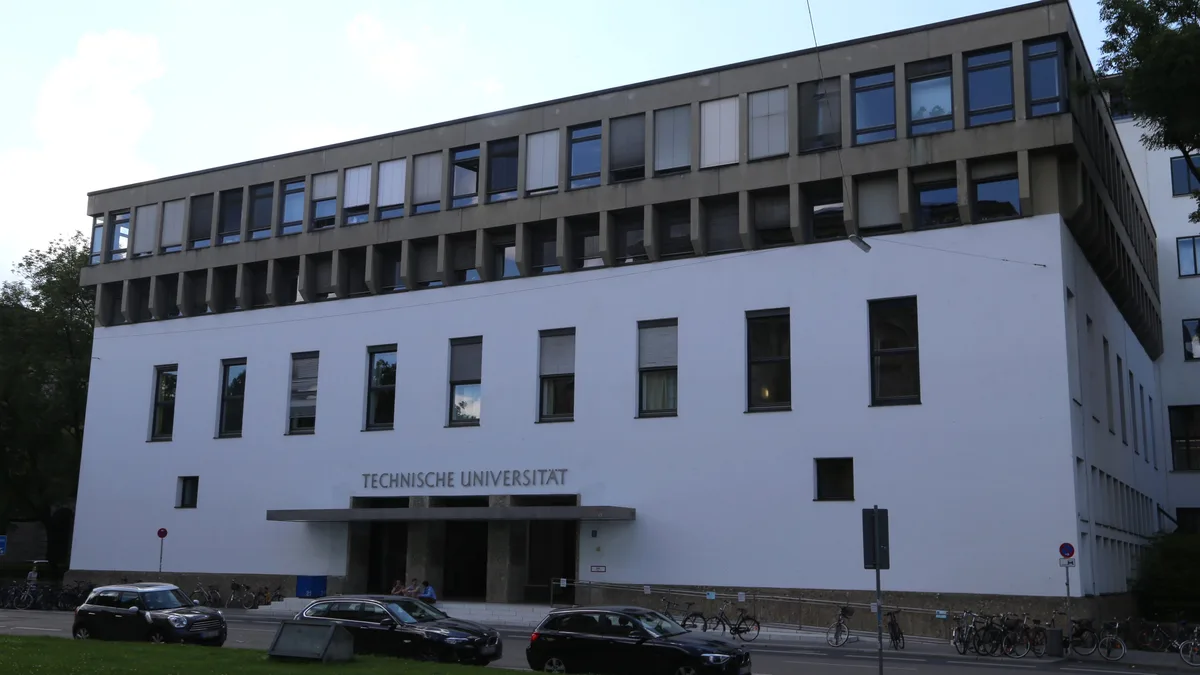
SE3 spun out of the computer vision lab of Professor Daniel Cremers at the Technical University of Munich, where Köstler and chief technology officer Simon Klenk were PhD students. Cremers, a winner of the Leibniz Prize, is the company's chief science officer. Köstler previously worked on Tesla's Autopilot team and at Nvidia Research, according to Fortune.
The company works on multiple contracts with Germany's armed forces, the Bundeswehr, and in Ukraine, where its technology is already deployed, Accel said. Its partners include sensor maker Hensoldt, drone software company Auterion and drone developer ERC System, and its software runs on Auterion's Skynode computers, according to The Next Web.
Accel partner Matt Robinson told Fortune that the team was "uniquely qualified to take on the challenge of building spatial AI for autonomous systems", a task he said defence primes have found very difficult.
SE3 plans to grow from about 40 employees to about 120 and open offices in London, Berlin, the Nordics and Baltics, and Poland, Köstler told Fortune. Defence will drive revenue for at least the next 12 months, but a small team will begin exploring civilian robotics. As a German company, SE3 is bound by strict export rules and serves European NATO members and their allies. "It's really the elected parliament that decides in the end what we will do," Köstler said.
What it means for European founders and investors
SE3 is betting that European militaries will want software that is not tied to any single drone maker. Procurement frameworks such as the Modular Open Systems Approach favour independent software that works across platforms, Accel noted, and Köstler argues that vendor specific stacks lead to costly lock in within a few years.
The deal also shows how quickly capital is moving into European defence tech. The EU aims to mobilise up to EUR 800 billion in defence spending by 2030, and a Series A of this size only months after a seed round shows that top tier generalist investors such as Accel now compete for the space. For founders, the opening is in software layers that make mixed fleets from different suppliers work together, rather than in building yet another drone.
For more European defence and drone coverage, see our reports on Helsing's new interceptors, Beyond Vision's drone production round and Tekever's Series D.
Spotted an error? Email contact@europreneursmedia.com and we'll correct it. See our corrections policy and editorial standards.