Orakl Oncology raises EUR 30m to test cancer drugs on virtual patients
The Gustave Roussy spin out pairs lab grown tumour samples with patient data and AI. It plans to expand into new cancer types and build teams in the US and UK.
Orakl Oncology, a Paris based startup that builds AI powered "virtual cancer patients" to predict how drugs will perform before clinical trials, has raised a EUR 30 million (USD 34 million) Series A. The round was co-led by Norrsken VC and Singular, according to EU-Startups and Sifted, which first reported the deal on Thursday 12 November.
New investors InfraVia Capital Partners, Serena, the Patient Autonome Fund managed by Bpifrance, Teampact Ventures and Plug and Play joined existing backers Verve Ventures, Speedinvest and HCVC. The round brings Orakl's total funding to EUR 45 million (USD 50 million).
What Orakl does
Orakl was founded in 2023 as a spin out of Gustave Roussy, one of Europe's leading cancer research institutes near Paris. It is led by chief executive Fanny Jaulin, chief technology officer Gustave Ronteix and chief operating officer Diane-Laure Pagès, and has a team of more than 40 people, according to Startup Researcher.
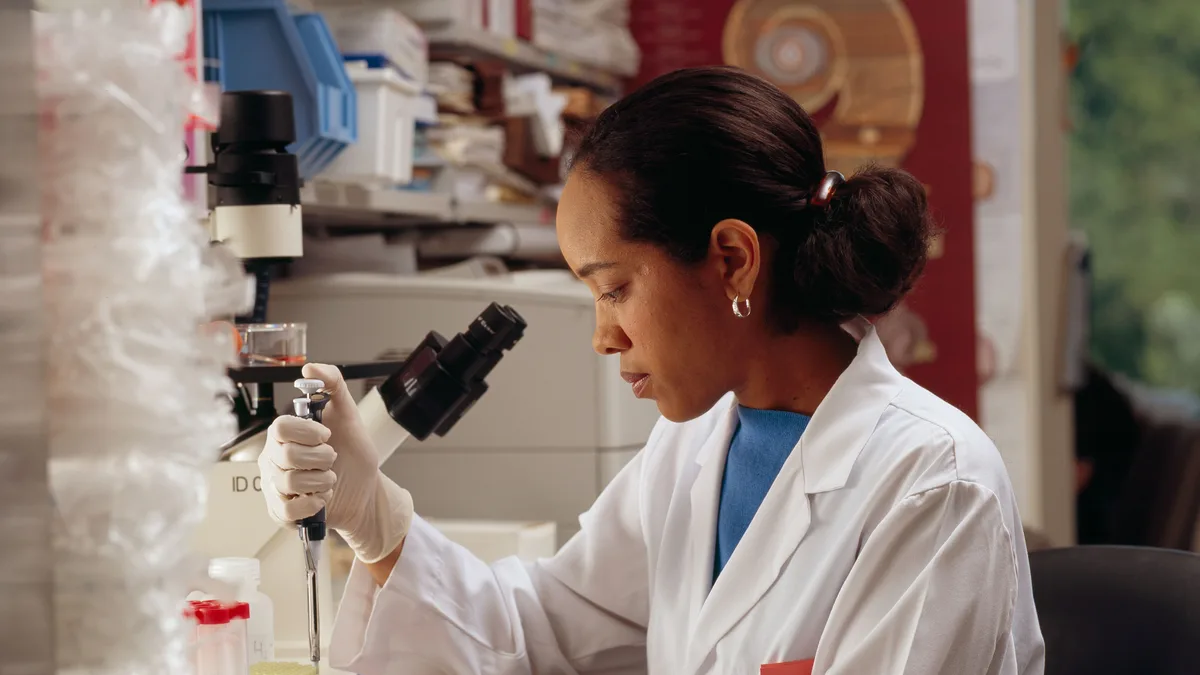
The company grows real patients' tumours in the lab as organoids and pairs them with each patient's medical history and deep molecular data. Because these "virtual patients" can be tested against many treatments at once, Orakl says it can predict how a patient will respond to a drug long before it reaches the clinic. Drug makers can then decide earlier which candidates to push forward and which patients to target.
The problem it is going after is a costly one. Around 75% of oncology drug candidates fail in Phase 2 trials, largely because tumour and patient biology is still poorly understood, the company said via EU-Startups. Orakl says its predictive engine has shown 90% accuracy in predicting cancer trial outcomes, including predictions that closely matched recent pancreatic cancer trial results. That figure is the company's own and has not been independently verified.
How the money will be used
Orakl has signed three contracts with pharmaceutical partners, and more than 15 additional cancer centres in Europe, North America and Asia are in contract negotiations to supply data. With the new funding, the company plans to increase its data generation fivefold, move beyond colorectal and pancreatic cancer into lung and gastric cancer, and build teams in the US and UK to apply its predictions across more than 10 drug programmes, according to Startup Researcher.
"For decades, we've developed cancer drugs without being able to reliably predict how they will behave in patients until they reach clinical trials," Jaulin said. "We believe the next breakthrough will come from making tumor and patient biology predictable."
Agate Freimane, general partner at Norrsken VC, said too many drugs still enter expensive trials "without a clear view of which patients they will work for". Jeremy Uzan, general partner at Singular, which led Orakl's EUR 11 million seed round in December 2024, said the founders combine expertise in cancer research, cell biology and computational biology. Orakl has also added Philip Tagari, chief scientific officer at insitro and a former Amgen research leader, as an adviser.
What it means for European founders and investors
Orakl is part of a growing group of European companies that apply AI not to designing molecules, which many startups now do, but to the harder question of whether a drug will actually work in people. EU-Startups counts several other 2026 rounds in AI enabled drug development and oncology, including Barcelona based Biorce (EUR 43.8 million) and Paris based Rivercell (EUR 22 million).
The round also shows how European hospital research can become a data moat. Orakl's access to patient samples and clinical records through Gustave Roussy and partner centres is hard for software only rivals to copy, which is a key reason investors cite. The challenge will be to prove its predictions in pharma programmes at scale and to grow beyond Europe without losing that link to hospitals.
For founders in health tech, the deal is a sign that a Nordic impact investor and a Paris based venture firm are willing to back data heavy biology platforms at Series A. For related coverage, see our reports on Atlas Bio's simulated clinical trials and bit.bio's human cell models.
Spotted an error? Email contact@europreneursmedia.com and we'll correct it. See our corrections policy and editorial standards.