Rolls-Royce adds a GBP 1.5bn buyback as data centre power orders surge
The engine maker said its large engine order backlog has grown to about 2,500 engines and its Power Systems order book hit a record GBP 8.6 billion. Mid-term targets will be reviewed in February.
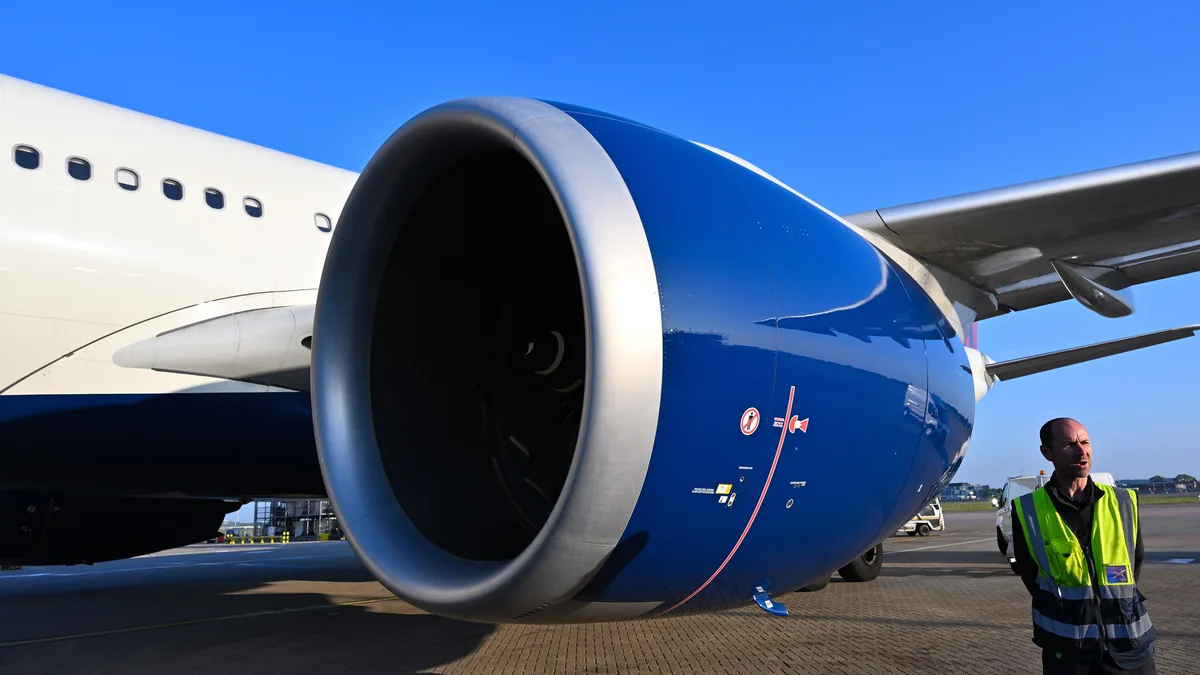
Rolls-Royce announced an interim share buyback of GBP 1.5 billion on Thursday 12 November and said it was confident of meeting its 2026 guidance of GBP 4.7 billion to GBP 4.9 billion in underlying operating profit and GBP 3.8 billion to GBP 4.0 billion in free cash flow, according to its trading update.
The buyback will be completed by the full year results on 25 February 2027 and forms part of the existing GBP 7 billion to GBP 9 billion programme for 2026 to 2028. It follows the substantial completion of a GBP 2.5 billion programme for 2026, Alliance News reported.
Why it matters
The guidance compares with underlying operating profit of GBP 3.46 billion and free cash flow of GBP 3.27 billion in 2025, according to Alliance News. Chief executive Tufan Erginbilgic said the company had continued to deliver "strong operational, strategic and financial progress in the second half of 2026", and that it would revisit its mid-term targets at the full year results in February, as previously communicated.
"We are also accelerating the phasing of our share buyback," Erginbilgic said, adding that the move reflects confidence in sustainable free cash flow growth. Shares rose 2.7% to 1,378.80 pence on Thursday morning in London, Alliance News reported.
Civil aerospace
Demand remains strong across widebody and business aviation, and the large engine order backlog has grown to around 2,500 engines, Rolls-Royce said. Orders in the second half include 70 Trent 7000 engines for Avolon and 22 Trent 7000 engines for the Cathay Group, while Air China selected 15 Trent XWB-84 engines and Philippine Airlines 18 Trent XWB-97 engines.
Large engine flying hours, which drive much of the company's service revenue, grew 4% year on year in the first ten months of 2026 to 114% of 2019 levels. Rolls-Royce expects the full year figure to be towards the lower end of its 115% to 120% range. Flying hours from Middle Eastern airlines are above pre-conflict levels, but other regions have been hit by capacity cuts linked to fuel prices, which the company expects to reverse when fuel prices fall.
Power Systems and data centres
The fastest growth is in Power Systems. Order intake rose 62% in the first nine months and the order backlog reached a record GBP 8.6 billion at the end of September, up from GBP 8.0 billion at the end of June. Orders for gas engines used in power generation nearly tripled, driven by data centres that need their own prime power, while orders for diesel backup engines also stayed strong, the company said.
Rolls-Royce is also finalising a significant multi year agreement to supply backup generators to a major hyperscale technology customer, TheBusinessDesk.com reported. In July it opened a logistics and operations centre in Mankato in the US that more than doubles production capacity for its mtu Series 4000 generator sets, and its next generation engine, with 20% higher power density, remains on track for launch in 2028.
In defence, the company said it continues to see strong demand across both mature and new programmes. In October, Rolls-Royce and the UK government announced plans for a joint ten year GBP 2.5 billion research programme on gas turbine technology, which includes work towards a UK engine for the next generation of narrowbody aircraft.
"Data centres are becoming a big business for Rolls-Royce," said Alex Pugh, an analyst at Freetrade, quoted by TheBusinessDesk.com. He added that the jet engine business "is still exposed to oil prices" because Rolls-Royce is paid largely for the hours its engines spend in the air.
What it means for European founders and investors
Rolls-Royce is one of the clearest examples in Europe of how AI infrastructure is reshaping old industries. A company that needed support during the pandemic now sees some of its strongest order growth from data centre operators that want on site power. For startups working on grid connections, energy storage, power management and cooling for data centres, that confirms a large and growing market, and large industrial groups that may become partners or buyers.
The planned narrowbody engine programme and the growing order books also point to more work for the UK and European aerospace supply chain, including suppliers of advanced materials, testing and digital engineering tools. For more on capital returns and AI driven demand at European industrials, see our reports on Siemens Energy's buyback and Airbus' nine month results.
Spotted an error? Email contact@europreneursmedia.com and we'll correct it. See our corrections policy and editorial standards.