Neobe raises USD 6.8m to help cancer drugs break through tumour walls
The Stevenage-based company engineers harmless bacteria to travel to tumours and dissolve the dense tissue that keeps immune cells and drugs out. The seed round, led by ARC Ventures, should take its lead programme to a planned IND filing in 2028.
Neobe Therapeutics, a bio-engineering company based at the Stevenage Bioscience Catalyst in the UK, has raised a seed round of USD 6.8m (GBP 5m), the company announced via Business Wire. The round was led by ARC Ventures.
Faber, Macmillan Ventures, Proven Connect and Empirical Ventures also took part, alongside follow-on investment from pre-seed investor 2048 Ventures. EU-Startups put the round at EUR 6.1m and said total funding now exceeds EUR 9.4m.
The problem Neobe wants to solve
Immunotherapy and other new cancer drugs have changed treatment for many patients, but they do not work for everyone. Neobe argues that the reason is often physical rather than biological: many solid tumours are surrounded by a dense, fibrous matrix that immune cells and drugs cannot get through.
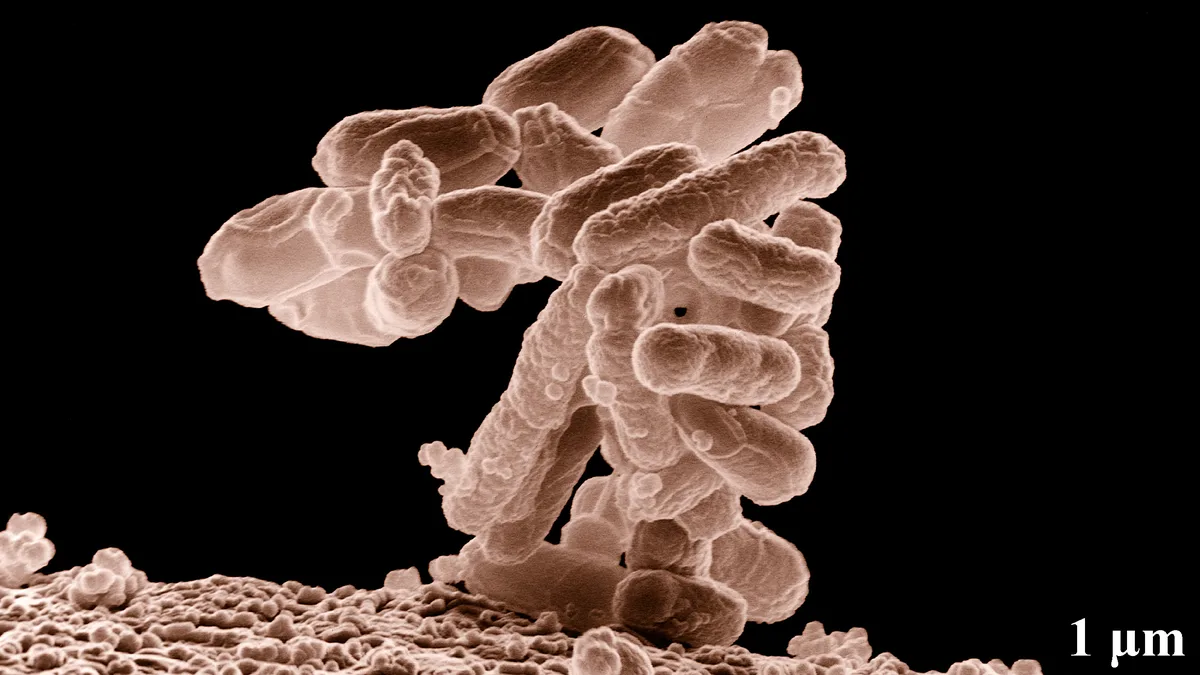
The company engineers harmless strains of common bacteria into what it calls programmable living medicines. Once injected, the bacteria are designed to travel specifically to tumours and release enzymes that dissolve the surrounding matrix, opening the way for immune cells or other drugs to reach the cancer cells.
The idea of using bacteria against cancer dates back to the early 20th century, the company notes, but engineering harmless bacteria to home in on tumours safely and break down these barriers has proved difficult.
Early research results
In a 2026 paper in the journal Molecular Cancer Therapeutics, Neobe worked with researchers at the University of Cyprus and Barts Cancer Institute in London. They tested the bacterial platform in a model of triple negative breast cancer that did not respond to a common combination of immunotherapy drugs. According to the company, a single dose of engineered bacteria led to complete tumour regression in response to the same treatment in one of the models tested, and when tested with the same cancer months later, no further tumours developed, which the company says suggests a lasting immune memory.
These are preclinical results in models, not human data. Neobe's own plan reflects that: the new money is meant to take its lead programme, NEO22, through preclinical studies to an investigational new drug (IND) filing in 2028.
Team, investors and next steps
Neobe was founded in 2021 by Dr Pedro Correa de Sampaio, its CEO, and Dr Annelise Soulier, its chief scientific officer. The company has appointed immuno-oncology specialist Dr Laura Chow as chief medical officer to oversee clinical development towards a first-in-human trial. That trial is to be funded by an additional tranche of the current seed round.
"Several treatments that can cure cancer already exist, but in far too many patients they simply cannot get to where they are needed," said Correa de Sampaio. Joseph Korff, founder of ARC Ventures, said the investor was backing Neobe's "differentiated approach to overcoming the physical barriers created by dense tumour matrices".
Macmillan Ventures, the venture arm of the charity Macmillan Cancer Support, is among the new investors. Its head, Felix Litzkow, said the charity wants to help break down barriers "to treatment, to care and in this case, the barrier that stands between a cancer and a treatment that could cure it". Dealroom News also covered the round.
What it means for European founders and investors
Neobe's approach does not compete with existing cancer drugs. It aims to make them work in more patients. That positioning can matter for an early-stage biotech: a platform that improves established therapies may find partners among large pharma companies that already sell those drugs.
The round is also an example of how UK biotech seed rounds are being built. Specialist life science investors sit alongside a patient-charity venture arm and the pre-seed backer, and the company plans a further tranche tied to clinical progress. Founders in therapeutics can use milestone-based tranches to raise enough for the next step without pricing the whole journey to the clinic upfront.
Europe's early-stage biotech scene has been active this month. SRTD Biotech raised EUR 31.5m for precision mRNA, and Allox raised a seed round for allosteric drug discovery. For investors, the common thread is platform technologies that can be applied to several programmes, with a clear path to a first clinical milestone.
Spotted an error? Email contact@europreneursmedia.com and we'll correct it. See our corrections policy and editorial standards.