Gama raises EUR 15m to build large solar arrays for satellites near Paris
The French company has pivoted from solar sails to deployable solar arrays built with high volume silicon cells. It plans to deliver a first demo unit in summer 2027 with US customer Eclipse Space.
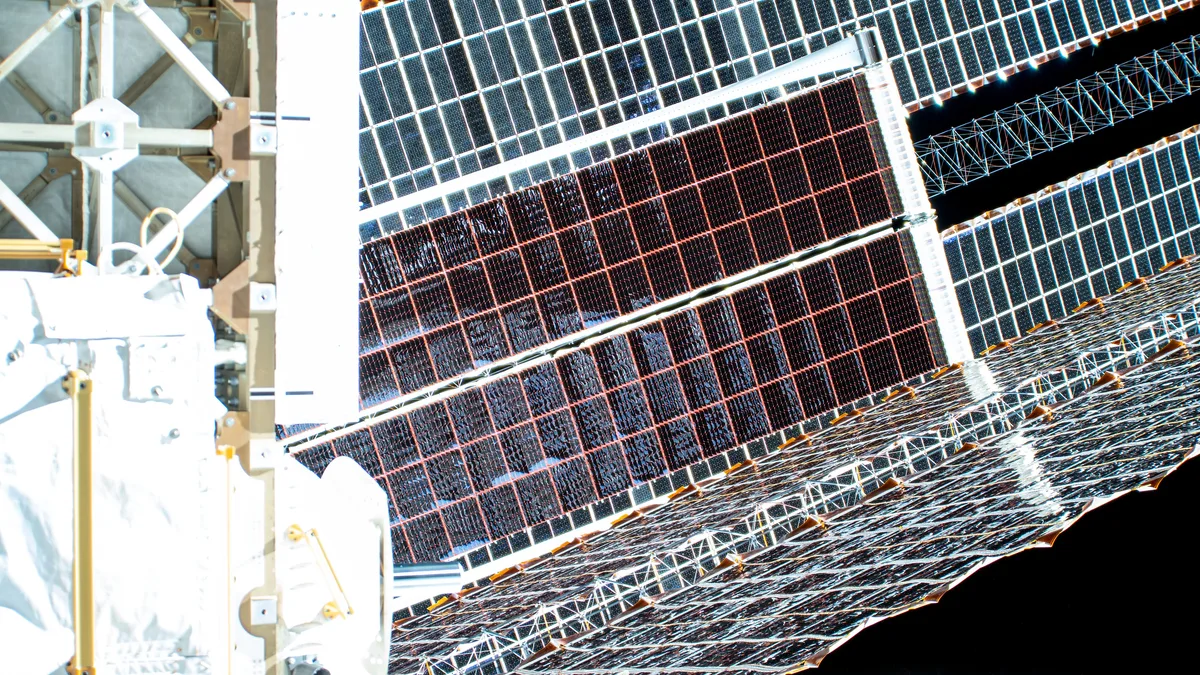
Gama, a French space company that has moved from solar sails to large deployable solar arrays for satellites, has raised EUR 15 million (about USD 16.6 million) in seed funding, SpaceNews and Tech Funding News reported on Thursday 12 November.
Transition, Planet A, Draper Associates and Manta Ray joined the round. The money will fund the first production line for Wing, Gama's deployable solar array, at its site in Ivry-sur-Seine near Paris, and roughly 60 new hires on top of its current team of 30, Tech Funding News reported.
From solar sails to solar arrays
Gama was founded in 2022 by Andrew Nutter, Louis de Gouyon Matignon and Thibaud Elziere. Its first mission, Gama Alpha, launched in 2023 to test a solar sail. The company had earlier raised EUR 2 million in a round led by Bpifrance, the French space agency CNES and angel investors, according to Tech Funding News.
Raising money for solar sails proved difficult. "We very quickly realised it was going to be complicated to get the funding to make it happen," Nutter told Tech Funding News. The team says its experience with large deployable structures transfers directly to solar arrays, and that industry contacts describe the supply chain for such arrays as weak. "We need a product, and we need volume," he said.
Nutter co-founded Westwing, the home and living e-commerce company listed in Frankfurt since 2018. Gama's chief technology officer Daniel Chapman and vice president of engineering Duncan Adams both worked on Starlink hardware and production lines at SpaceX.
Power is the new bottleneck
A satellite's power depends on the size of its solar array, which has to fit inside a rocket fairing. "For years the hard part of space was getting there. Launch has become dramatically cheaper, unlocking vast new applications, and the constraint has moved to power," Nutter said. "Wing is built to solve that problem at volume."
Most satellite makers still use specialist III-V solar cells, which are made in small volumes and can take a year or more to arrive. Gama uses high volume silicon cells originally made for rooftop solar and says it can deliver within six months once production starts. Wing is sold as a full power system, including an array rotator, power management, optional energy storage and control software that connects to the customer's flight computer.
Silicon cells are cheaper but less efficient, at around 20% compared with roughly 32% for the best germanium based cells, Tech Funding News reported. Competition is real: Rocket Lab, which owns the cell maker SolAero, launched silicon arrays for orbital data centres this year, and Redwire launched its low mass ELSA array in March.
First customer and next steps
Gama's only named customer so far is Eclipse Space, a company in Redmond, Washington, founded by former SpaceX Starlink engineers. Under a deal announced in September, Eclipse builds the satellite bus and Gama supplies the large solar arrays, with a first demo unit planned for summer 2027. Nutter said Gama is also talking to other potential customers in Europe and the United States.
"Energy in orbit is becoming critical infrastructure, and the way it is produced matters," said Nick de la Forge, co-founder and general partner at Planet A. Ari Helgason, co-founder and general partner at Transition, said "Europe needs companies that can build strategic space hardware at industrial scale".
What it means for European founders and investors
Gama is a clear example of a deep tech pivot towards a product with immediate demand. Satellite constellations, and new ideas such as orbital data centres, need far more power, and the supply of large arrays is a bottleneck. A European supplier that can build at volume could serve both European programmes and US constellation builders, which Nutter argues want suppliers that also help them sell in Europe.
The round also shows climate and industrial investors such as Planet A and Transition backing space hardware, not just software. The challenge is execution: a 30 person team with one named customer must build a factory line and prove its cost per watt against established rivals. For more European space startups, see our reports on EOS X Space and Tumbleweed.
Spotted an error? Email contact@europreneursmedia.com and we'll correct it. See our corrections policy and editorial standards.