ICEYE launches EUR 2bn all cash bid for Italian rocket maker Avio
The Finnish satellite operator wants to combine its radar constellation with Europe's light launcher and missile propulsion business, but needs Italy's golden power clearance and two thirds of the shares.
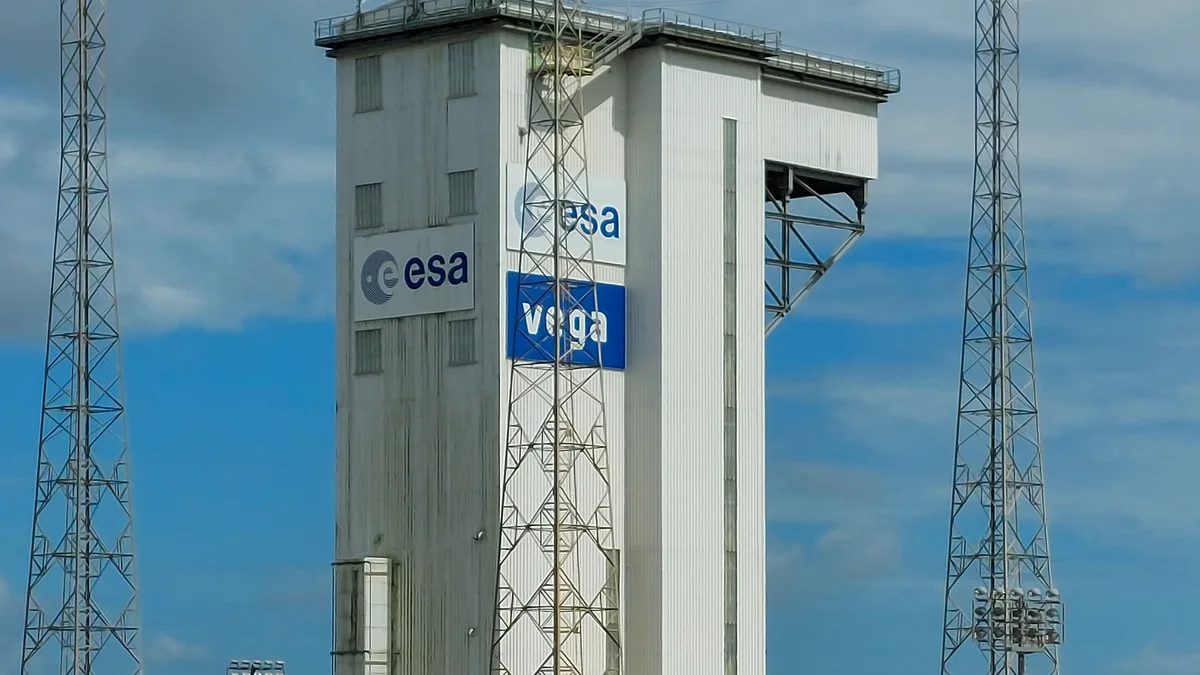
Finnish satellite operator ICEYE has launched an all cash voluntary tender offer for Avio, the Italian company behind Europe's Vega rocket, it announced on Tuesday 17 November. The offer, made through its wholly owned Italian subsidiary Iris 2, is EUR 41.00 per share, a premium of 21.3% to Avio's closing price on 16 November.
Reuters described the move as a surprise offer that values Avio at about EUR 2 billion. ICEYE aims to delist Avio from Euronext STAR Milan and says it would invest an additional EUR 1 billion in Italy over five years if the deal completes.
The terms of the offer
ICEYE said the EUR 41.00 price is also a 29.6% premium to Avio's one month volume weighted average price and 34.8% above the three month average, both through 16 November. The formal offer notice puts the maximum payment at EUR 2,052,657,251, AeroTime reported. ICEYE plans to pay with cash on its balance sheet and acquisition debt, and the full offer document will be published after Italy's market regulator CONSOB approves it.
The bid needs acceptances that take ICEYE to 66.67% of Avio's share capital, a threshold the bidder can waive. If it reaches 90%, it plans to buy out the remaining shareholders; otherwise it could delist Avio through a merger into Iris 2. According to the offer notice cited by AeroTime, Leonardo is Avio's largest shareholder with 18.04%, followed by Advent International with 6.54% and Goldman Sachs with 5.33%. The notice does not disclose any commitments from them to tender.
Approvals and conditions
Because Avio is considered strategic, the deal requires clearance under Italy's golden power foreign investment rules, Il Sole 24 Ore reported, describing that as probably the most sensitive of the 12 conditions ICEYE has set. Foreign investment approvals are also needed in France and the United Kingdom, along with a European Commission review under the Foreign Subsidies Regulation and approval from the Committee on Foreign Investment in the United States. Avio said its board would begin assessing the offer.
Why ICEYE wants a rocket maker
Founded in 2014, ICEYE builds and operates a constellation of synthetic aperture radar satellites that provide imagery to governments and militaries, and it has supplied Ukraine with radar imagery since 2022, Reuters noted. Avio is the prime contractor for the Vega C light launcher and co-produces the P120C solid rocket motor used on both Vega C and Ariane 6 through a joint venture with ArianeGroup. It also supplies propulsion for missile families such as Aster and CAMM-ER, and is building a solid rocket motor plant in Virginia.
ICEYE argues that a combined group would bring satellite production, launch and mission operations under one roof, giving it more reliable access to launch and giving Avio more visibility over future demand for Vega flights. "Governments need control of their critical space infrastructure, and Europe needs it most," said Rafal Modrzewski, ICEYE's chief executive and co-founder. The company says it would keep Avio's brand, Italian identity and workforce, and expects its planned investment to create up to 400 skilled jobs in Italy.
Finland's defence minister Antti Hakkanen welcomed the plan in comments reported by Reuters, saying a completed deal would raise the security of supply for Finnish and European defence to a new level.
What it means for founders and investors
This is an unusual move: a venture backed European scale up making a public takeover bid for a listed industrial champion. ICEYE raised a Series F of more than EUR 1 billion in June 2026 at a valuation above EUR 10 billion, according to AeroTime, and is now using that capital base, plus debt, to buy capacity rather than build it. For defence and space founders, it shows that the winners of the recent funding wave are starting to act as consolidators, and that vertical integration is part of the pitch to government customers.
It also shows the limits. A deal of this kind depends on national security screening in several countries, and the Italian government's view will be decisive. Founders planning cross border acquisitions in sensitive sectors should expect long timetables and political scrutiny. For more on Europe's defence and space funding boom, see our reports on Onodrim's USD 300m round, UFORCE's Series A and Hypersonica's EUR 100m raise.
Spotted an error? Email contact@europreneursmedia.com and we'll correct it. See our corrections policy and editorial standards.