Eurobank agrees to buy Bulgaria's Fibank at a EUR 1bn valuation
The all cash deal, to be followed by a mandatory tender offer, would combine Fibank with Eurobank's Postbank. Eurobank plans a EUR 750m capital increase to help fund it.
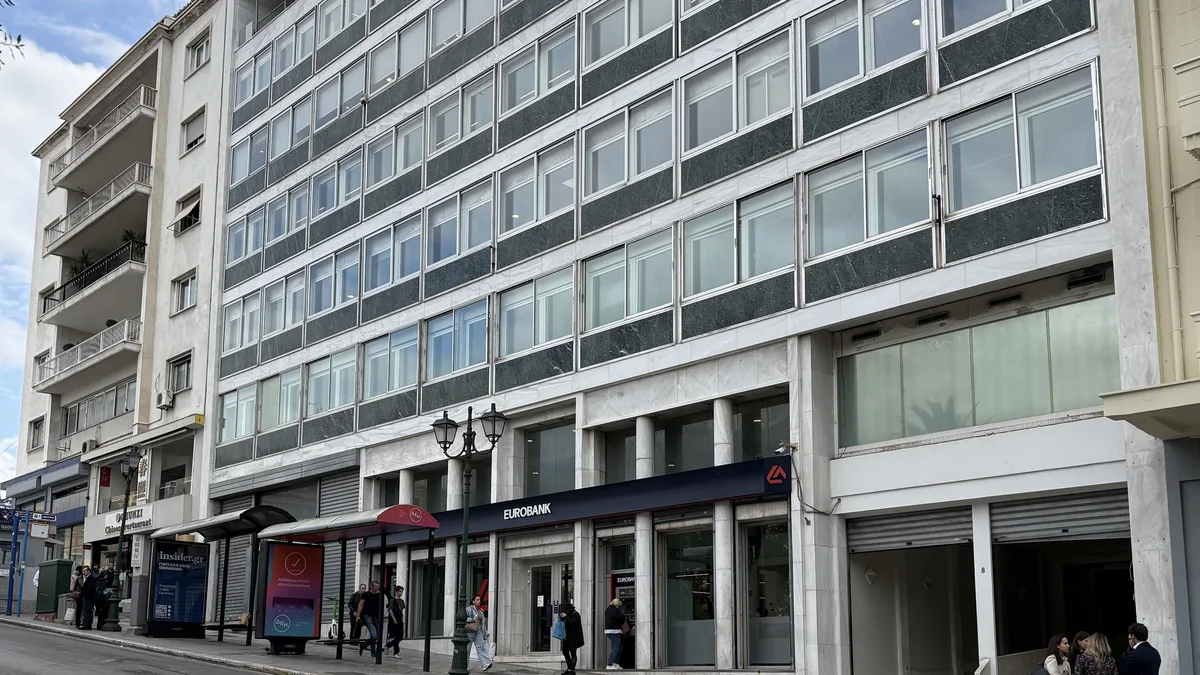
Greek banking group Eurobank has agreed to buy a 65% stake in First Investment Bank (Fibank), Bulgaria's fifth largest bank, from its founders Ivailo Mutafchiev and Tzeko Minev for about EUR 650 million in cash, the bank said on 18 November. The price of EUR 6.73 per share values all of Fibank at roughly EUR 1.0 billion.
After completion, Eurobank will launch a mandatory tender offer for the remaining shares. The Bulgarian Development Bank, which holds about 18%, has given an irrevocable undertaking to tender its stake. Closing of the 65% purchase is expected in the first half of 2027, subject to regulatory approvals.
Creating Bulgaria's largest bank
Eurobank has been in Bulgaria since 2002 through Eurobank Bulgaria, which trades as Postbank and is the country's fourth largest lender. Combining Postbank with Fibank would create the largest bank in Bulgaria by total assets and deposits, with a market share of about 20% based on Bulgarian National Bank data for 30 September 2026, Eurobank said. The two banks are due to complete a legal merger in the fourth quarter of 2027.
Fibank was founded in Sofia in 1993 and has been listed on the Bulgarian Stock Exchange since 2007. It runs 115 branches in Bulgaria, a banking subsidiary in Albania and a branch in Cyprus, and employed more than 2,700 people at the end of 2025. At the end of September 2026 it reported total assets of EUR 10.6 billion, customer deposits of EUR 8.2 billion and a profit after tax of EUR 97 million for the first nine months of the year.
"By bringing together Fibank and Postbank, our ambition is to create Bulgaria's leading financial institution," said Eurobank chief executive Fokion Karavias.
How the deal is financed
Eurobank will pay in cash, using existing excess capital and a share capital increase of about EUR 750 million. The increase, equal to about 4% of Eurobank's market value on 17 November, is planned as an accelerated bookbuild placed only with qualified investors, so existing shareholders would not get pre-emption rights. An extraordinary general meeting to approve it is planned for 9 December 2026. Fairfax Financial Holdings, Eurobank's largest shareholder with about 32.9% of the voting rights, has said it supports the deal and intends to vote in favour.
Synergies and returns
Eurobank expects annual cost synergies of more than EUR 70 million after tax, fully phased in by 2029. On that basis it forecasts about 12% accretion to profit after tax, about 7% accretion to earnings per share after the capital increase, and a return on consumed capital of about 21%. The acquisition of 100% of Fibank would cut the group's CET1 ratio by about 160 basis points, leaving it close to 14% at closing, and the bank said it will keep its 55% payout target.
Bulgaria's national news agency BTA also reported the terms, noting that Eurobank already owns Postbank in the country.
Why it matters
Bulgaria joined the euro area on 1 January 2026, and Eurobank presents the deal as a bet on one of the faster growing economies in the currency bloc. It is also a cross border banking deal at a time when consolidation in European banking is a major theme for investors. Unlike UniCredit's pursuit of Commerzbank, this transaction is agreed with the controlling shareholders, which lowers the execution risk.
The deal would raise Bulgaria's share of Eurobank's group net income from about 15% to about 26% on a pro forma basis, according to the bank, making the group less dependent on Greece.
What it means for founders and investors
For small and mid sized companies in Bulgaria, the combination creates a bigger lender with more balance sheet capacity, and Eurobank highlights increased exposure to SME lending as one of the reasons for the deal. Mergers of this kind can also bring a period of system migrations, product changes and branch reviews, which local fintechs and software suppliers often turn into partnership or customer opportunities.
For investors, the main checkpoints are the 9 December shareholder vote, the pricing of the EUR 750 million placement and regulatory approvals in the first half of 2027, followed by the tender offer for minority shareholders between the second and third quarters of 2027.
Spotted an error? Email contact@europreneursmedia.com and we'll correct it. See our corrections policy and editorial standards.