Bayer licenses Hansoh lung cancer drug in a deal worth up to USD 3.25 billion
The German group gets global rights outside Greater China to an experimental antibody-drug conjugate for solid tumours, including lung cancer. It is the latest in a series of big Western licensing deals with Chinese biotechs.
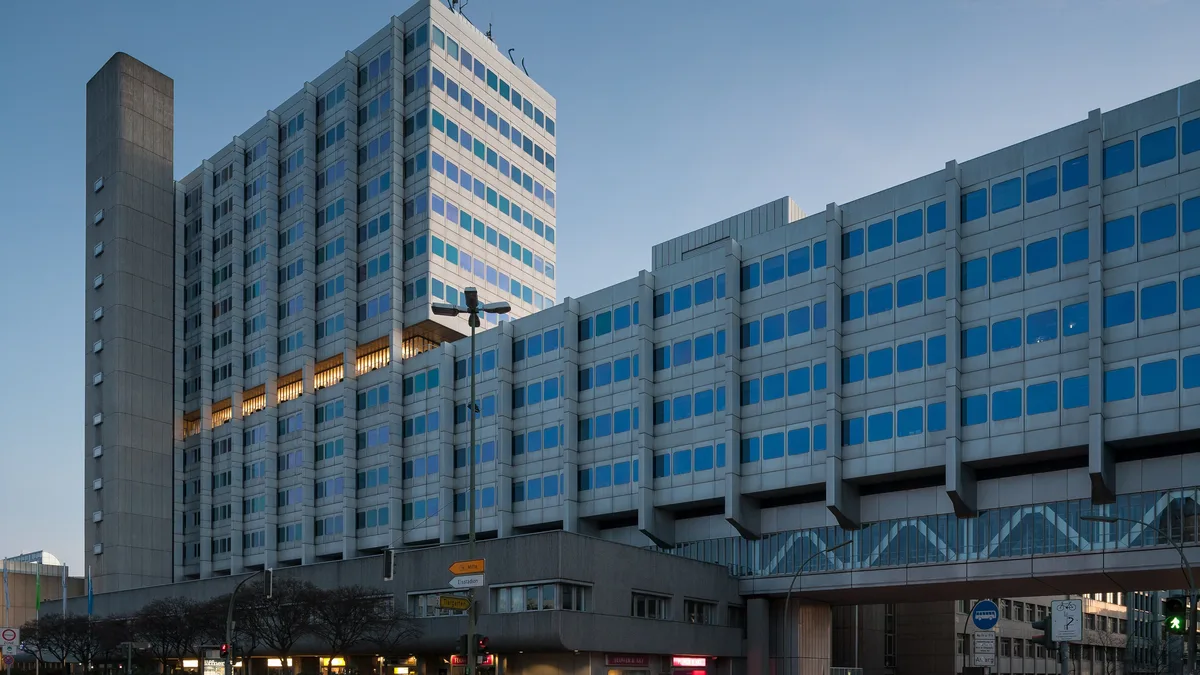
Bayer and Hansoh Pharma have signed a global licensing agreement, excluding mainland China, Hong Kong, Macau and Taiwan, for the development and commercialisation of HS-20122, an experimental cancer drug, Bayer said on Wednesday 25 November in a press release.
Hansoh will receive USD 150 million upfront and could receive up to USD 3.1 billion in milestone payments plus tiered royalties on future sales, taking the potential deal value to about USD 3.25 billion, Reuters reported. The agreement becomes effective once antitrust clearances are received.
The drug
HS-20122 is a bispecific antibody-drug conjugate (ADC). It targets two proteins, EGFR and c-MET, and delivers a cancer-killing payload directly to tumour cells. Both proteins are found in various solid tumours, where they may contribute to disease progression or resistance to treatment, Bayer said. The main focus is non-small-cell lung cancer, which accounts for about 85% of lung cancers worldwide.
The compound has completed a phase 1 study. According to Fierce Biotech, Hansoh presented data at the European Society for Medical Oncology congress in October showing an overall response rate of 61.3% and a six-month progression-free survival rate of 75.3%. Phase 1 trials are early and small, so later studies will need to confirm these results.
Who gets the rights
Reuters reported, citing Hansoh, that three Hansoh units granted the licence to Bayer Consumer Care AG, a Bayer subsidiary, allowing it to develop, manufacture and commercialise HS-20122 globally outside the excluded territories.
What the two companies said
"Despite treatment advances, people living with lung cancer continue to need new options that offer greater efficacy and improved tolerability," said Juergen Eckhardt, head of business development and licensing at Bayer's pharmaceuticals division. He said the deal supports Bayer's precision oncology strategy of advancing ADCs that target tumour cells more selectively.
Eliza Sun, an executive director of Hansoh's board, said the drug "has demonstrated promising clinical activity across multiple tumor types" and that Hansoh looks forward to working with Bayer to advance it.
Part of a wider trend
The deal adds to a series of large licensing agreements between Western drugmakers and Chinese biotech companies. Reuters said drugmakers have struck more than a dozen such deals this year, including AstraZeneca's USD 18.5 billion obesity drug deal with CSPC Pharmaceutical in January and Bristol Myers Squibb's USD 15.2 billion deal with Jiangsu Hengrui in May.
Hansoh has become a sought-after partner for ADCs in particular. Fierce Biotech reported that Roche signed a deal with Hansoh last month worth up to about USD 15 billion covering a broad portfolio of ADC programmes, and that GSK is developing two Hansoh ADCs. In oncology, Bayer already markets the prostate cancer drug Nubeqa and the lung cancer therapy Hyrnuo, Fierce Biotech noted.
Bayer in context
Bayer had about 88,000 employees and sales of EUR 45.6 billion in 2025, with research and development spending of EUR 5.8 billion, according to its release. Large European pharmaceutical groups have been active dealmakers this autumn. Earlier this week, Sanofi agreed to buy Insmed for USD 41 billion.
What it means for European founders and investors
The structure of the deal, with a modest upfront payment and most of the value tied to milestones, is typical of licensing agreements and shifts much of the risk to later stages. Only a fraction of the headline figure is guaranteed.
For European biotech founders, the steady flow of in-licensing deals with China is a competitive signal. Big pharma companies can source early clinical assets from China quickly and at a lower upfront cost, which raises the bar for European startups trying to sell or license similar programmes. Companies with differentiated science, strong early data and a clear path to approval in Europe and the US will be best placed. More company news is in our leaders section.
Spotted an error? Email contact@europreneursmedia.com and we'll correct it. See our corrections policy and editorial standards.