Babcock signs record GBP 8.7 billion deal to maintain UK nuclear submarines
The Gateway Agreement replaces the current maritime support contract from 1 December and could run for up to 15 years. The government says it will create 3,000 jobs and speed up maintenance.
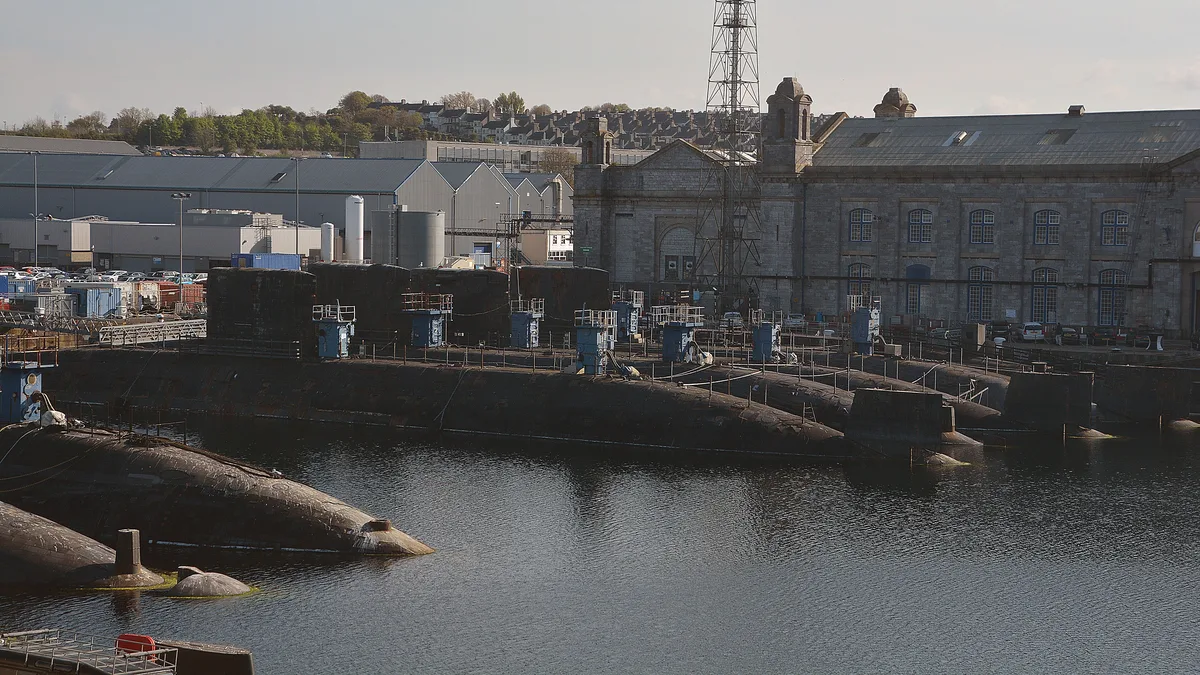
Babcock International has signed a five-year Gateway Agreement with the UK Ministry of Defence worth GBP 8.7 billion to maintain the Royal Navy's submarines and run naval base services, the largest contract in the company's history, Babcock said on Thursday 26 November.
The Ministry of Defence described it as an investment of around GBP 8 billion. Babcock's figure covers a GBP 8 billion contract backlog plus a GBP 0.7 billion framework. Its shares rose about 7% to the top of the FTSE 100, Reuters reported.
What the agreement covers
The Gateway Agreement brings submarine maintenance, engineering, technical services and naval base services at HMNB Devonport, Devonport Dockyard and HMNB Clyde under one contractual framework. It succeeds the Future Maritime Support Programme, whose extension ends on 30 November 2026, and takes effect on 1 December 2026.
The initial term is five years, with a potential aggregate term of up to 15 years. A separate memorandum of understanding sets out the long-term relationship between the ministry and Babcock in the UK submarine enterprise, including the move from the Vanguard class of nuclear-armed submarines to the Dreadnought class.
Jobs and supply chain
Babcock said the deal safeguards 8,500 existing nuclear defence jobs and should create around 3,000 new full-time roles, mainly in Plymouth, on the Clyde and in Bristol, plus more than 2,500 apprentice and graduate places over five years. The government said the five-year contract also includes about GBP 2.4 billion of spend in the wider UK supply chain, around GBP 1 billion of it aimed at small and medium-sized companies.
Why the government wants it
The contract comes amid scrutiny of submarine availability. The Guardian noted that faults have kept some boats in dry dock for months, forcing the working submarines and their crews to stay at sea for longer, and that HMS Vengeance recently returned after a record 217 days submerged.
The ministry said the new framework includes incentives for faster delivery, so that submarines spend less time in maintenance and more time available for operations, including NATO and AUKUS commitments and deterrent patrols. "Not only will this agreement get our subs out of the docks and into the sea faster, it will create 5,500 new jobs, apprenticeships and graduate opportunities," Defence Secretary Wes Streeting said.
Babcock chief executive Harry Holt, who took over in July, said the agreement would help the company "increase submarine availability and develop the skills, infrastructure and capability to support the Royal Navy's submarine force for the years ahead."
Part of a larger investment wave
The government said the deal sits alongside Project Royal Oak, a GBP 26 billion programme over ten years to modernise infrastructure at Devonport, Clyde and Portsmouth. It added that the Defence Nuclear Enterprise supports over 6,000 UK companies and around 47,000 jobs, with workforce demand forecast to rise to about 65,000 by 2030.
Market reaction
Investors welcomed the award. The Guardian reported that the shares climbed to nearly GBP 11, their highest since August but still well below a peak of nearly GBP 15 earlier this year. Babcock also builds five Type 31 frigates in Rosyth, a programme that has faced cost problems.
What it means for European founders and investors
For defence and industrial tech start-ups, the most relevant number is the supply chain spend. Around GBP 1 billion earmarked for smaller businesses over five years gives suppliers in engineering services, inspection, digital maintenance tools and training a defined route into one of Europe's largest naval programmes, usually as subcontractors to a prime such as Babcock.
For investors, the deal adds long-dated, government-backed revenue to a listed defence group and shows how European states are locking in multi-year support contracts as they rearm. It also follows recent defence news on our site, such as Agon's Series A for defence AI and Indra's Forward2030 plan. More company news is in our leaders section.
Spotted an error? Email contact@europreneursmedia.com and we'll correct it. See our corrections policy and editorial standards.