Sanofi agrees to buy Insmed for USD 41 billion to add blockbuster lung drug Brinsupri
The French drugmaker is paying a 46 percent premium to the price before takeover reports, a month after it said it was ready for larger acquisitions to prepare for life after Dupixent.
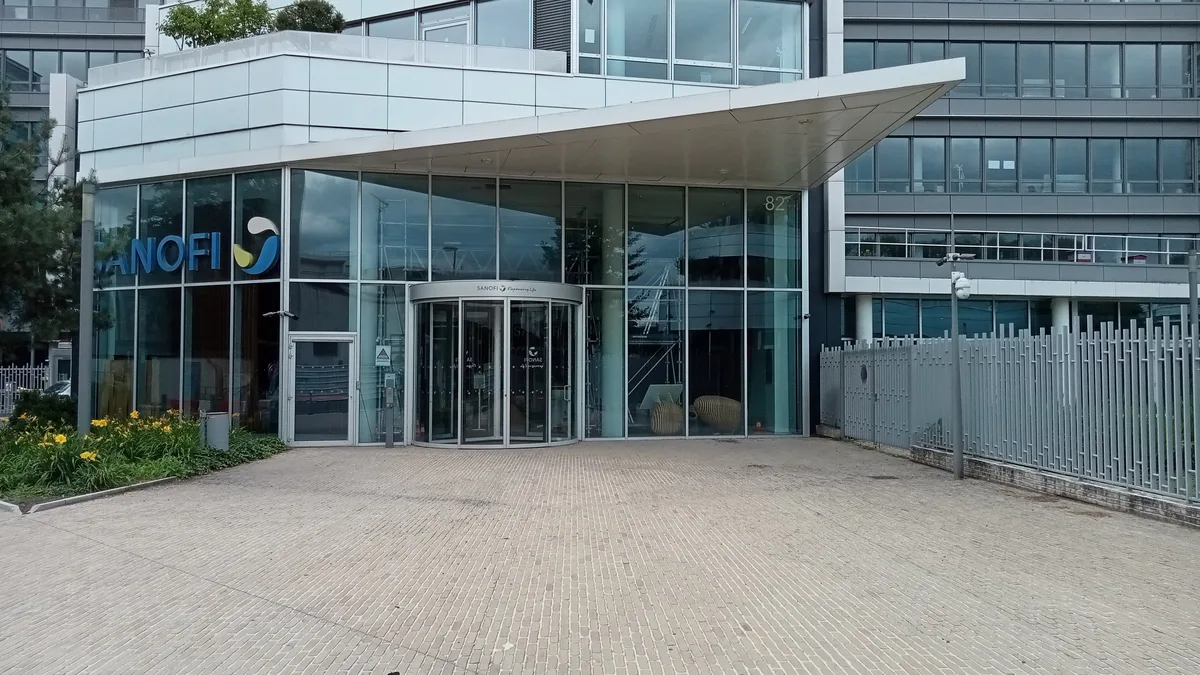
Sanofi has agreed to acquire Insmed, a US biopharmaceutical company with two marketed lung medicines, for USD 175 per share in cash, the French group announced early on Tuesday 24 November. The price gives Insmed a total equity value of about USD 41.0 billion, or EUR 37.6 billion.
The offer is about 46 percent above Insmed's unaffected closing price on 18 November, the day before media reports of a possible deal, according to the joint announcement. Compared with Insmed's last closing price, the premium is about 17.5 percent, Reuters reported. Both boards have approved the transaction, which Sanofi expects to close in the first half of 2027.
What Sanofi is buying
Insmed is based in Bridgewater, New Jersey, and has offices and research sites in the United States, Europe and Japan. Its most important product is Brinsupri (brensocatib), a once-daily oral pill for non-cystic fibrosis bronchiectasis (NCFB), a chronic lung disease in which the airways are permanently widened, causing persistent cough and flare-ups.
According to the Sanofi announcement, Brinsupri is the first and only approved treatment for NCFB and is approved in the US, the EU, the UK and Japan, with patient groups that differ by jurisdiction. It launched in the US in August 2025 and had generated USD 1.09 billion in revenue by 30 September 2026. Insmed estimates that about 500,000 people in the US, 600,000 across France, Germany, Italy, Spain and the UK, and 150,000 in Japan have been diagnosed with NCFB.
The second marketed product is Arikayce, an inhaled antibiotic for hard-to-treat lung infections caused by mycobacterium avium complex (MAC). Arikayce revenue was USD 433.8 million in 2025, up 19 percent, the companies said. In September, the US Food and Drug Administration accepted under priority review an application to use it as part of a combination regimen for MAC lung disease.
Sanofi also gets TPIP, an inhaled once-daily treatment in phase 3 trials for pulmonary arterial hypertension, pulmonary hypertension linked to interstitial lung disease and progressive pulmonary fibrosis. A further phase 3 study in idiopathic pulmonary fibrosis is planned for the first half of 2027. TPIP is not approved anywhere, and its safety and efficacy have not been established.
Deal terms and financing
Sanofi will pay for the deal with a combination of new debt and cash on hand and says it has secured committed financing. It expects the acquisition to add to business earnings per share by the end of 2028, and says it will not affect its financial guidance for 2026. The group also confirmed its progressive dividend policy and said it expects to keep a strong credit rating.
Closing requires approval by Insmed shareholders, clearance from US and certain non-US regulators and other customary conditions. J.P. Morgan is Sanofi's exclusive financial adviser, with Cravath, Swaine & Moore as legal adviser. Goldman Sachs is advising Insmed, with Freshfields as legal adviser.
Early market reaction
In US overnight trading, Insmed shares rose about 17 percent to USD 174.44, close to the offer price, after closing 5.5 percent higher on Monday, RTTNews reported. Sanofi's US-listed shares were down 1.65 percent at USD 46.00 in the same session.
Why Sanofi is doing it
"This acquisition is a major strategic step to significantly accelerate our mid- and long-term growth trajectory and further strengthen our mid- and early-stage pipeline," said Belén Garijo, Sanofi's chief executive, in the announcement. Will Lewis, chair and chief executive of Insmed, said the deal "delivers immediate, certain cash value for Insmed shareholders".
The move follows a clear signal from Paris. When Sanofi raised its 2026 guidance on 30 October, Garijo said business development and M&A would be critical to manage the period after Dupixent, its top-selling medicine, loses exclusivity. Chief financial officer François Roger said at the time that Sanofi was considering deals larger than its usual EUR 2 billion to EUR 5 billion range and was most interested in late-stage or marketed assets in rare diseases, vaccines and immunology.
Insmed fits that description: it already sells two medicines, one of which has passed USD 1 billion in revenue, and it brings a late-stage pipeline in rare lung diseases that builds on Sanofi's existing respiratory business.
What it means for European founders and investors
At about USD 41 billion, the deal is many times larger than the EUR 2 billion to EUR 5 billion range Sanofi has usually worked in, and it shows where big pharma is now willing to pay up: proven commercial products with room to grow, not early science. For European biotech founders, the lesson is that the highest valuations still go to companies that reach approval and show real sales.
It also confirms that European drugmakers facing patent cliffs have the balance sheets to buy in the US, where many late-stage assets sit. European biotechs with phase 3 programmes in immunology, respiratory or rare diseases may find more buyers interested, either for full acquisitions or licensing deals, as large groups look to rebuild pipelines.
Other recent deals point the same way, from argenx buying Unnatural Products to private equity taking Recordati private. Watch for antitrust reviews, the Insmed shareholder vote and whether Sanofi uses its remaining capacity for smaller early-stage deals, which it says it retains. More transactions are in our funding and M&A section.
Spotted an error? Email contact@europreneursmedia.com and we'll correct it. See our corrections policy and editorial standards.