Carlsberg spinout Traitomic raises EUR 20m Series A led by Sofinnova
The Danish company licenses a screening platform first built to improve brewing barley and now uses it to find natural genetic variants in crops and microorganisms for food and biotech customers.
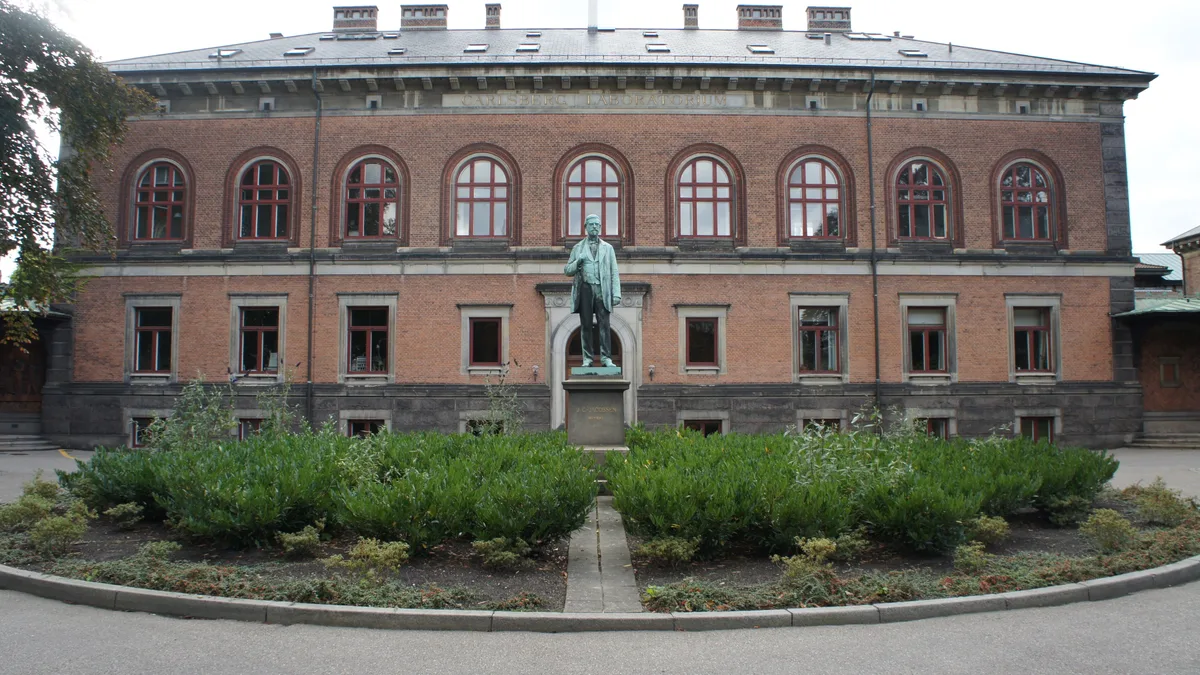
Traitomic, a Danish biotechnology company spun out of Carlsberg, has raised EUR 20 million in a Series A round led by Sofinnova Partners, Tech Funding News and AgNavigator reported on 17 November.
The Export and Investment Fund of Denmark (EIFO), Footprint Firm, Nordic Foodtech VC, PSV Hafnium and SVG Ventures also joined. It is the company's first external funding since the spinout.
What Traitomic does
Traitomic's platform, FIND-IT, screens large conventionally bred populations of plants or microorganisms to find naturally occurring genetic variants that carry a desired trait. Unlike gene editing tools such as CRISPR, it does not introduce changes; it looks for the right mutation among existing ones. Carlsberg scientists described the method in Science Advances in 2022, using a library of 500,000 barley plants, according to Tech Funding News.
The company says it has delivered 116 customer requested traits across 32 organisms, from crops and food ingredients to industrial microorganisms, and Tech Funding News reported the traits went to 47 customers. In agriculture, chief executive and co-founder Gustav Hambraeus told AgNavigator that activity has been strongest in legumes, oilseeds and specialty crops, including lupin, pea, bean, oat and canola. For crops where it already has a platform, he said, individual traits can often be identified, validated and handed over within four to eight weeks.
A licence, not ownership
FIND-IT was developed at the Carlsberg Research Laboratory to improve barley for brewing. Carlsberg keeps the intellectual property and continues to use it for brewing, while Traitomic holds an exclusive licence for all other uses, Hambraeus told Tech Funding News. "Traitomic is not working with barley, and is not working with brewers," he told AgNavigator. Anders Røed, executive vice president for group strategy and commercial at Carlsberg, said the company is an example of how fundamental research can create value far beyond its original field.
"We believe finding the right genetic change is often more valuable than creating it," Hambraeus said. Michael Krel, partner at Sofinnova Partners, said Traitomic has shown "the ability to develop commercially relevant traits across a broad range of organisms and applications".
From delivered traits to market
Hambraeus was open that delivering a trait and seeing it in a product are different milestones. Customers handle downstream testing, scale up and commercialisation, and in plants that takes time, so many delivered traits are still moving through customers' pipelines. He told Tech Funding News that about 100 traits are in pre-commercial assessment with clients, while some microbial applications, which have shorter development cycles, are already in commercial products.
Where the money goes
The team has about 30 people. Hambraeus said the money will mainly be used to grow the business, with the US and Australia as first priorities, including an Australian branch focused on plant traits. Traitomic also plans to move from trait discovery towards end to end trait development in customers' own varieties and strains, and could expand into mushrooms, algae and probiotic bacteria.
What it means for founders and investors
Traitomic is a clean example of corporate research turned into a venture backed company through an exclusive licence, a model that lets a large group keep its core use while outside investors fund new markets. For founders in agrifood and industrial biotech, the pitch is regulatory: traits found by screening follow a conventional breeding route that is broadly accepted worldwide. Tech Funding News noted that the EU adopted rules in June 2026 that will ease the regulation of some gene edited plants, with most changes taking effect in July 2028, which could narrow that advantage over time. For more on European bio and food tech funding, see our reports on Biomatter's Series A and bit.bio's Series D.
Spotted an error? Email contact@europreneursmedia.com and we'll correct it. See our corrections policy and editorial standards.