Siemens Energy adds up to EUR 9bn to its share buybacks on the eve of results
The Munich energy technology group announced the extra programme in a regulatory statement on Tuesday evening, hours before its fourth-quarter figures. It has already spent close to EUR 4bn under its current buyback.
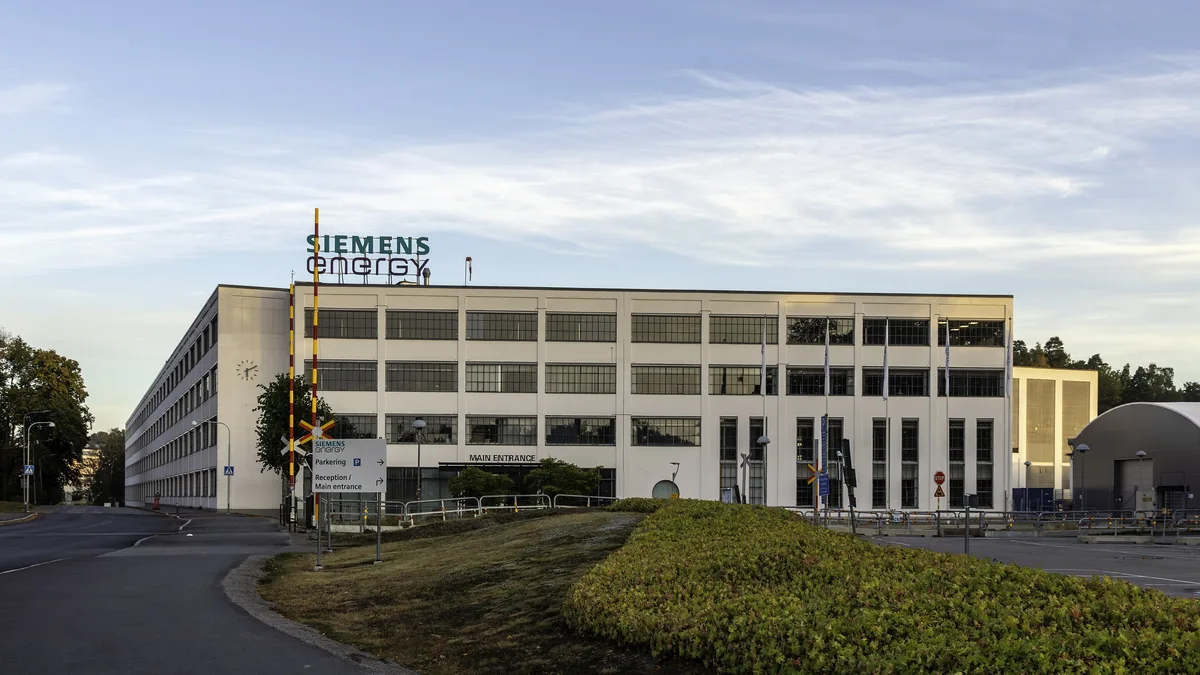
Siemens Energy plans to repurchase its own shares worth up to EUR 9 billion through the end of its 2030 financial year, the company said in a regulatory disclosure published at 20:15 Berlin time on Tuesday 10 November. The new programme comes on top of the buyback of up to EUR 6 billion that is already running.
Taken together, the two programmes give the Munich-based group room to buy back up to EUR 15 billion of its shares over the coming years. The announcement came the evening before Siemens Energy was due to publish its fourth-quarter and full-year results on Wednesday, Reuters reported.
What the company announced
The statement was published as inside information under the EU Market Abuse Regulation, which requires listed companies to disclose price-sensitive decisions promptly. It was short. It said Siemens Energy is expanding its share buyback and plans to buy back further shares worth up to EUR 9 billion by the end of fiscal 2030, in addition to the current programme of up to EUR 6 billion. Siemens Energy's financial year runs from October to September, so fiscal 2030 ends on 30 September 2030.
The disclosure did not set out a timetable for the new programme, how it will be split into tranches, or whether the repurchased shares will be cancelled. It also did not include any figures for the fourth quarter. Those details may follow with the annual results, but at the time of writing the company had not published them.
How far the current programme has got
The existing buyback of up to EUR 6 billion is meant to run until the end of fiscal 2028, according to the company's buyback page. Siemens Energy has carried it out in tranches. The first, between March and May 2026, bought about 12.6 million shares for EUR 2 billion at an average price of roughly EUR 158. The second, from June to August, added about 6.5 million shares for EUR 1 billion.
A third tranche of up to EUR 2 billion started on 24 September. By 6 November the company had bought about 7.4 million shares in that tranche for around EUR 985 million. In total, Siemens Energy has spent close to EUR 4 billion on around 26.5 million of its own shares since March.
The daily figures also show how the share price has moved. The average price paid in the third tranche was about EUR 133, well below the levels of the spring. In the first week of November the company was buying at between roughly EUR 116 and EUR 130 per share, compared with about EUR 144 at the end of September.
Why the company has cash to return
Siemens Energy's turnaround has been one of the biggest stories on the German stock market in recent years. In August it reported record figures for its third financial quarter. Orders reached EUR 17.9 billion, revenue rose to EUR 11.4 billion and the order backlog climbed to EUR 162 billion, according to its Q3 earnings release. Net income rose to EUR 1.19 billion from EUR 697 million a year earlier, and free cash flow before tax reached EUR 2.3 billion, helped by customer advance payments.
Demand for gas turbines from AI data centres in the United States and for power plant projects in the Middle East has driven much of that growth, Reuters notes. The company's grid technology business, which makes transformers and other equipment for electricity networks, has also grown quickly. Its Siemens Gamesa wind unit reported a positive quarterly result in the third quarter for the first time since fiscal 2022.
For the full 2026 financial year, Siemens Energy has guided for net income of around EUR 4 billion and free cash flow before tax of around EUR 8 billion. In August it said it expected its profit margin before special items to be towards the upper end of its 10% to 12% range.
What to watch in the results
The full-year figures due on Wednesday will show whether the group met that outlook and what it expects for fiscal 2027. Investors will also look for more detail on how the new buyback fits with the company's investment plans, including the expansion of its factories to meet demand for turbines and grid equipment.
What it means for European founders and investors
For investors, the scale is notable. A combined buyback capacity of up to EUR 15 billion is a large commitment for a group whose wind business had not posted a quarterly profit since fiscal 2022 until this summer. It signals that management expects strong cash generation to continue for several years, and that it sees its own shares as good value at current prices.
For founders, the story is a reminder of where demand in the energy transition is concentrated right now. Grid equipment, power generation and services for electricity-hungry data centres are attracting capital from large industrial groups and investors alike. We covered the same theme in our reports on Infineon's outlook for AI data centre power chips and on Vensum Power's Series A. Start-ups that sell software, components or services into this supply chain have large, well-funded customers who are under pressure to expand capacity quickly.
Spotted an error? Email contact@europreneursmedia.com and we'll correct it. See our corrections policy and editorial standards.