UK watchdog tells McCormick and Unilever to fix food deal concerns or face an in-depth probe
The Competition and Markets Authority found that combining Schwartz with Knorr and Colman's could weaken competition in UK dry recipe mixes and dry sauces. Mustard was cleared, and the companies have until 18 November to offer a fix.
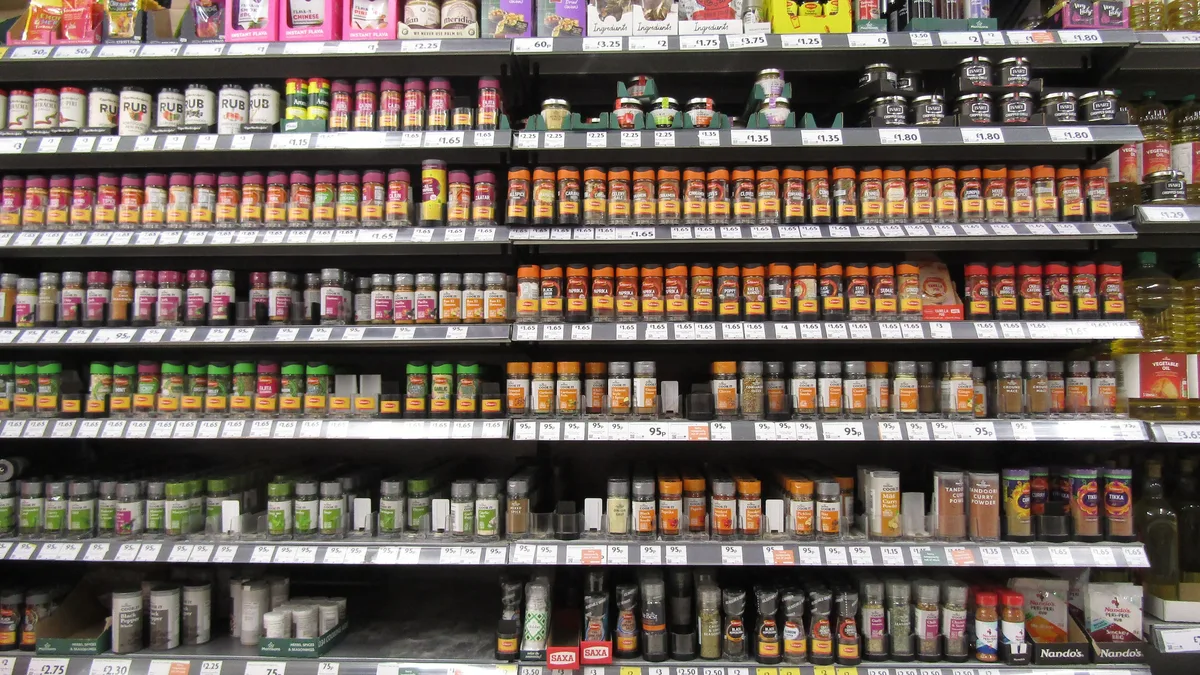
The UK Competition and Markets Authority (CMA) said on Wednesday 11 November that McCormick's planned combination with most of Unilever's food business gives rise to a realistic prospect of a substantial lessening of competition in two UK markets: dry ingredient mixes and, separately, dry sauces supplied to retailers. The deal will be referred for an in-depth phase 2 investigation unless the companies offer acceptable undertakings, according to the CMA case page.
The parties have until 18 November 2026 to propose remedies, the regulator said in its summary of the phase 1 decision. Unilever called the finding "an expected step in the regulatory process" and said it is working constructively with the CMA on a suitable remedy, Reuters reported.
What the CMA found
In the UK, McCormick sells dry ingredient mixes and sauces under the Schwartz brand and condiments under brands such as French's, while Unilever Foods sells products under Knorr, Maille and Colman's. The CMA looked in detail at dry mixes such as chilli con carne seasoning, dry pour over sauces such as parsley sauce, and mustard.
For dry mixes and dry sauces, the regulator found that the deal would combine the two largest branded suppliers and that the merged company would be "the largest supplier of dry ingredient mixes and dry sauces by far". It also found that the two companies compete closely. Own label products and rival brands, including Nestlé's Maggi in dry mixes and Premier Foods' Bisto in dry sauces, impose "only a limited constraint", the summary says.
The CMA added that entry and expansion are difficult because supermarket shelf space is limited and existing suppliers are well established, and it has not seen growth in these markets that would bring in enough new competition.
Mustard cleared
Mustard was not a problem. Evidence from large supermarkets showed that shoppers do not treat English, French and American style mustards as substitutes, so the CMA treated each as a separate market. Because McCormick sells American style French's and Unilever sells English style Colman's and French style Maille, the regulator found no overlap and "no realistic prospect of competition concerns".
What happens next
If McCormick and Unilever offer no undertakings by 18 November, or the CMA considers them insufficient, the deal will be referred to phase 2 under the Enterprise Act 2002. The CMA said the full text of its decision will be published shortly. An in-depth review can end with a clearance, a clearance subject to remedies such as asset sales, or a block, Reuters noted.
The CMA reviewed the deal because the UK turnover of both McCormick and Unilever Foods exceeds GBP 100 million. It formally launched its phase 1 inquiry on 16 September. The deal cleared a key US hurdle on 5 October, when it received approval under the Hart-Scott-Rodino Act, according to Federal Trade Commission records cited by Reuters.
What the companies and analysts say
Unilever said it had already decided in August to market the Colman's brand and assets for sale "to proactively address potential competition concerns" and that "discussions with potential buyers are progressing well", according to The Grocer. McCormick also said it was working constructively with the regulator, Reuters reported.
Analysts see a remedy as feasible. Barclays analyst Warren Ackerman told The Grocer that dry mixes are "a very small part of Unilever's UK Food portfolio so solutions should be able to be found". Quilter Cheviot analyst Chris Beckett told Reuters that, with mustard cleared, Colman's "probably doesn't get sold", and that McCormick's Schwartz products in the UK could instead form part of a remedy package. Unilever shares were little changed on Wednesday, while McCormick fell 2.1% by 14:38 GMT, Reuters reported.
The deal in brief
Unilever and McCormick announced the combination on 31 March 2026. The transaction values Unilever Foods at an enterprise value of USD 44.8 billion, according to Unilever's announcement. Unilever will receive USD 15.7 billion in cash, and Unilever and its shareholders will receive 65% of the combined company's equity. At closing, Unilever shareholders will own 55.1%, McCormick shareholders 35.0% and Unilever 9.9%. Reuters describes the combined company as worth around USD 65 billion and the deal as the second largest food sector deal on record.
The combined group would have about USD 20 billion in revenue, based on 2025 figures, with brands including McCormick, Knorr, Hellmann's, Cholula, Maille and Frank's. Unilever's foods operations in India, Nepal and Portugal, its Lifestyle Nutrition and Buavita businesses and Lipton ready to drink are excluded. McCormick will keep its headquarters in Hunt Valley, Maryland, and its NYSE listing, set up an international headquarters in the Netherlands and plans a secondary listing in Europe. Completion is expected by mid-2027, subject to McCormick shareholder approval and regulatory clearances.
For Unilever, the deal would complete a shift towards beauty, personal care, wellbeing and home care, leaving a business with EUR 39 billion of 2025 revenue. It follows the spin-off of its ice cream business last year, Reuters noted. Unilever Foods generated EUR 12.9 billion of turnover in 2025, about 26% of the group, with underlying sales growth of 2.5%, Just Food reported.
What it means for European founders and investors
The CMA's finding shows that even a deal worth tens of billions can be held up by small product categories where two brands share a supermarket shelf. Phase 1 concerns over narrow categories are often resolved with targeted divestments, which can create buying opportunities for mid-sized food groups, private equity and challenger brands looking for established names with UK retail distribution.
It also shows how the UK regulator works in practice: a clear phase 1 deadline and an early chance to settle. The same day, the CMA gave AkzoNobel and Axalta a week to offer remedies in UK vehicle refinish coatings, Reuters reported, after their merger won conditional EU approval on 6 November. For more on the CMA's recent work, see our report on its investigation into Meta's commercial terms for AI.
Spotted an error? Email contact@europreneursmedia.com and we'll correct it. See our corrections policy and editorial standards.