Neurosterix raises USD 105m to take its schizophrenia drug into Phase 2
The Geneva and Boston biotech, spun out of Addex Therapeutics in 2024, also hired three former Karuna Therapeutics leaders behind the schizophrenia drug Cobenfy.
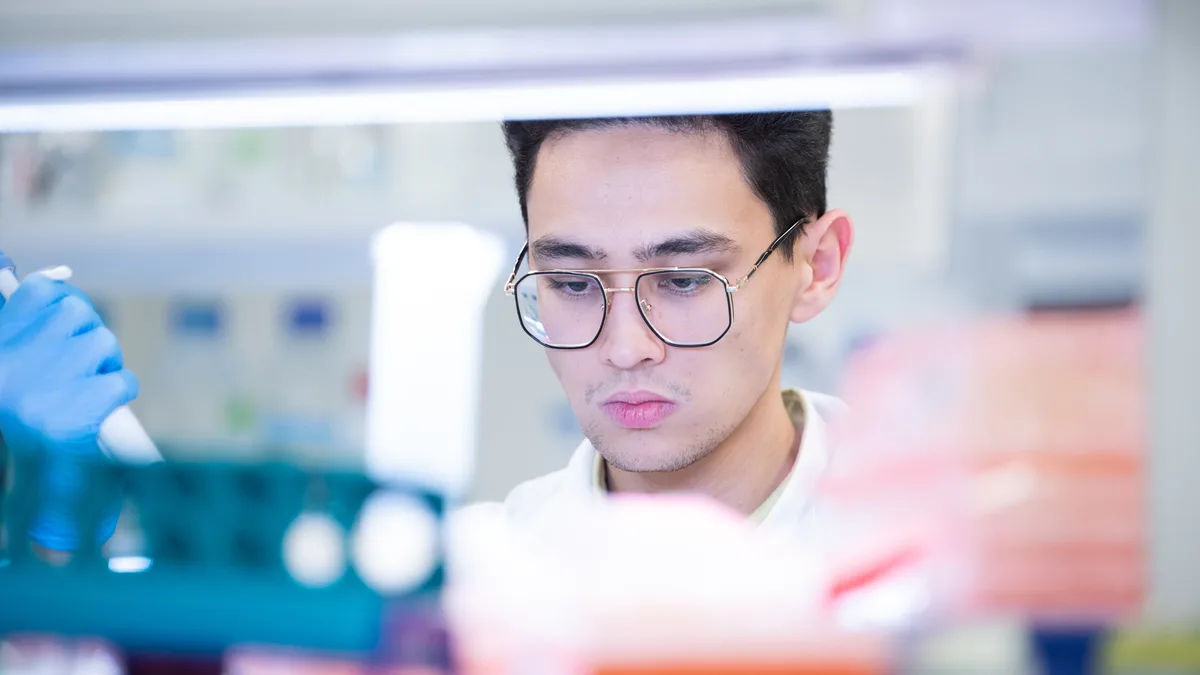
Neurosterix, a clinical stage biotech with operations in Geneva and Boston, has closed a USD 105 million Series B financing, its former parent Addex Therapeutics announced on Wednesday evening, 11 November. Neurosterix gave more details on Thursday 12 November: the round was led by RTW Investments, with participation from GV and Janus Henderson Investors among others, BioSpace reported.
The money will mainly fund a Phase 2 trial of NTX-253, an oral drug candidate for schizophrenia, and the rest of the company's pipeline of treatments for psychiatric disorders.
The drug
NTX-253 is a highly selective positive allosteric modulator (PAM) of the M4 muscarinic receptor. Rather than blocking dopamine directly, as most existing antipsychotics do, it is designed to fine tune muscarinic signalling in the brain, which indirectly modulates dopamine. The aim is to reduce psychosis symptoms while avoiding the movement disorders and metabolic side effects associated with traditional dopamine antagonists.
Neurosterix has completed Phase 1 single and multiple ascending dose studies of NTX-253, and the data support moving into larger Phase 2 studies, according to Addex. The pipeline also includes NTX-819, a potentially first in class mGlu7 negative allosteric modulator for mood and anxiety disorders, and NTX-529, a second M4 PAM for other psychosis and mood related disorders.
A crowded and closely watched target
The M4 receptor became one of the most closely watched targets in psychiatry after the US Food and Drug Administration approved Bristol Myers Squibb's Cobenfy in September 2024, the first schizophrenia drug with a new mechanism in decades. BMS gained the drug through its USD 14 billion takeover of Karuna Therapeutics. The field has also seen setbacks: AbbVie's M4 PAM emraclidine, acquired with Cerevel Therapeutics for USD 8.7 billion, failed two mid stage trials in schizophrenia, BioSpace noted.
Karuna veterans join
Alongside the financing, Neurosterix appointed three former Karuna leaders: Andrew Miller as executive chair of the board, Edmund Harrigan as an independent director and Stephen Brannan as chair of the clinical advisory board. Neurosterix is led by chief executive Fred Callori, who is also a managing director at Perceptive Advisors, Fierce Biotech reported.
The Addex connection
Swiss listed Addex Therapeutics spun out Neurosterix in April 2024 with a Series A of more than USD 60 million led by funds affiliated with Perceptive Advisors. Addex kept a 20% stake at the time, Fierce Biotech reported, partly to cut its own operating costs and extend its cash runway. Addex did not take part in the new round, and its stake has fallen to 8.5%, which Addex said is valued at USD 18.6 million. For Addex, the spin-out remains a way to keep exposure to the programmes it originally discovered without funding expensive clinical trials itself.
"The closing of this significant financing is a huge endorsement of the allosteric approach pioneered by Addex in schizophrenia as well as other neuropsychiatric disorders," said Tim Dyer, chief executive of Addex.
What it means for European founders and investors
The round follows a familiar pattern in European biotech: science developed by a listed company in Geneva is moved into a private spin-out, which then raises large rounds from US specialist investors and builds a team with US drug development experience. That route can unlock far more capital than the parent could raise on its own, but it also means the parent's shareholders keep a shrinking slice of the upside.
For founders in neuroscience, a USD 105 million Series B for a Phase 2 programme shows that investors are still willing to fund psychiatry when a mechanism has been validated by an approved drug, even after high profile failures. For more on European biotech financings, see our reports on Vectory's gene therapy round and Orakl Oncology's Series A.
Spotted an error? Email contact@europreneursmedia.com and we'll correct it. See our corrections policy and editorial standards.