Ex-Ilva sale: Jindal and Arvedi submit binding bids for Italy's troubled steelworks
Only two groups met the midnight deadline. An Italian consortium led by steel federation Federacciai and US investor Flacks stayed out, and Arvedi has made its offer subject to the backing of Taranto's institutions and community.
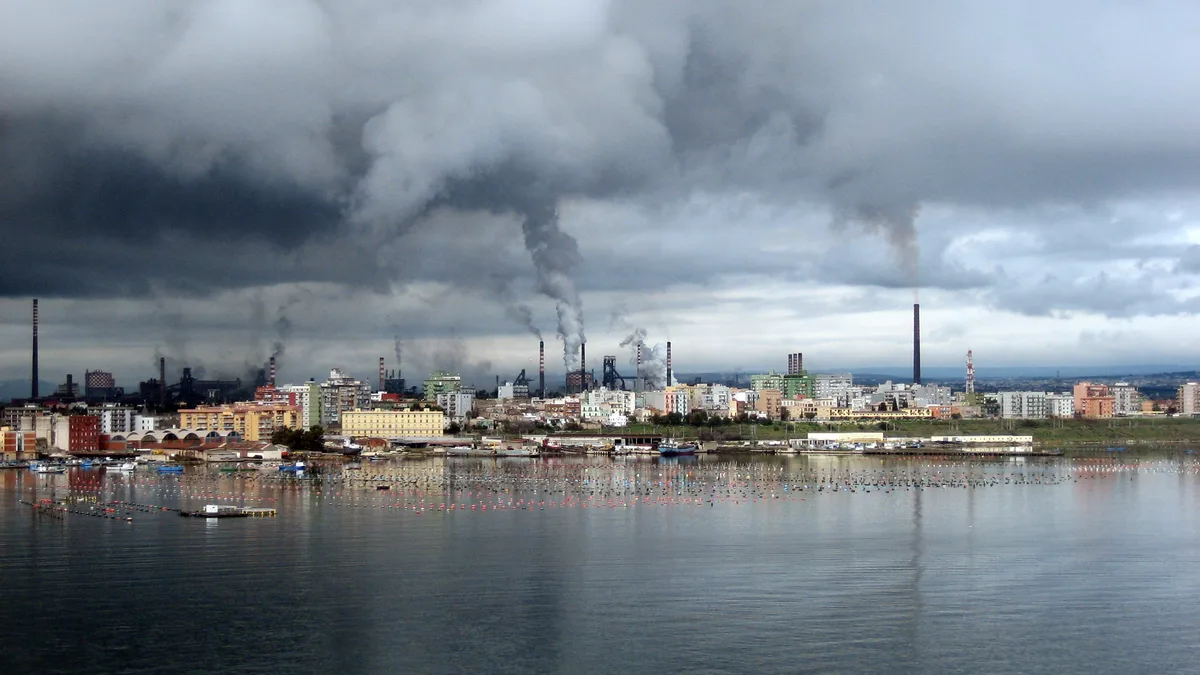
The special commissioners running Acciaierie d'Italia and Ilva, both in extraordinary administration, received two binding offers for the former Ilva steel plants by the deadline of midnight on 8 November 2026, they said in a statement reported by LaPresse. Both offers, from Italy's Arvedi group and Jindal Steel International, cover all of the active business units.
The commissioners will now examine whether the offers are complete and meet the tender requirements, Reuters reported. Prime Minister Giorgia Meloni's government has been seeking a new owner to safeguard steel production and thousands of jobs centred on the vast Taranto plant in southern Italy.
Who bid and who stayed out
According to Il Sole 24 Ore, the Italian consortium led by steel federation Federacciai did not submit an offer, and Flacks Group said on Sunday evening that it would not take part in the tender but would update its proposal only after talks with Meloni. The newspaper said Federacciai's group of 14 to 15 companies had only been interested in the rolling mills and had obtained an extension of the tender, which was originally due to close on 15 October.
For Jindal it is a return: the Indian group took part in the tender that closed in January 2025 but was absent from the one that closed in September 2025. For Arvedi, the steelmaker from Cremona, it is the first bid for Acciaierie d'Italia, although it was part of the AcciaItalia consortium with Jindal and Cassa Depositi e Prestiti in the 2016 to 2017 tender, which ArcelorMittal won.
Arvedi attaches conditions
Finarvedi, the Arvedi group's financial holding company, said its offer is subject to conditions precedent, including approval and acceptance of its industrial, environmental, employment and social plans by the institutions and community of Taranto. Without that, it said, it does not believe it will be possible to proceed. Federacciai president Antonio Gozzi said the federation fully supports Arvedi's initiative and that some member companies are already supplying slabs or have offered to collaborate on the project.
A plant halted by the courts
The sale is complicated by a court ruling. Reuters reported that a Supreme Court ruling last month ordered the shutdown of blast furnaces at the site on health and environmental grounds. Il Sole 24 Ore wrote that the Court of Cassation confirmed a stop order from the Milan Court of Appeal, making a switch to electric arc furnaces necessary if steel production in Taranto is to restart. According to the newspaper, both bidders appear to be aiming to restore production with electric furnaces rather than blast furnaces.
The human stakes are large. Il Sole 24 Ore said the group has just under 10,000 direct employees, and that the company has requested extraordinary wage support (cassa integrazione straordinaria) for 9,600 of them, including 8,600 in Taranto, because production has stopped. Talks on the wage support scheme were due to resume at the labour ministry on 10 November.
Unions Fim-Cisl, Fiom-Cgil and Uilm-Uil called for an urgent meeting at Palazzo Chigi to learn the details of the offers, including planned investments, timelines and guarantees for workers and suppliers. They said any solution must include a direct role for the state in the shareholder structure.
What it means for Europe's industry
The vast Taranto plant has long been central to Italian steelmaking, and its fate matters well beyond Italy. Europe is trying to cut emissions from steelmaking while protecting its producers from cheaper imports, and new EU trade measures have recently lifted European steel shipments, as ArcelorMittal's latest results showed. A Taranto restart based on electric arc furnaces would be one of the largest tests of that decarbonisation path in southern Europe.
For investors and founders in industrial decarbonisation, energy supply, scrap processing and plant engineering, the outcome will shape demand for years. For now, the process is at an early stage: the commissioners must first confirm that both offers comply with the tender rules, and Arvedi's conditions mean local and political consent will be central to whatever happens next.
Spotted an error? Email contact@europreneursmedia.com and we'll correct it. See our corrections policy and editorial standards.