Vetaion raises EUR 5.7m to build control cabinets with robots
The Garching based company turns 2D circuit diagrams into 3D models so robots can place components and wire one-off cabinets. Viessmann's venture arm is among the backers.
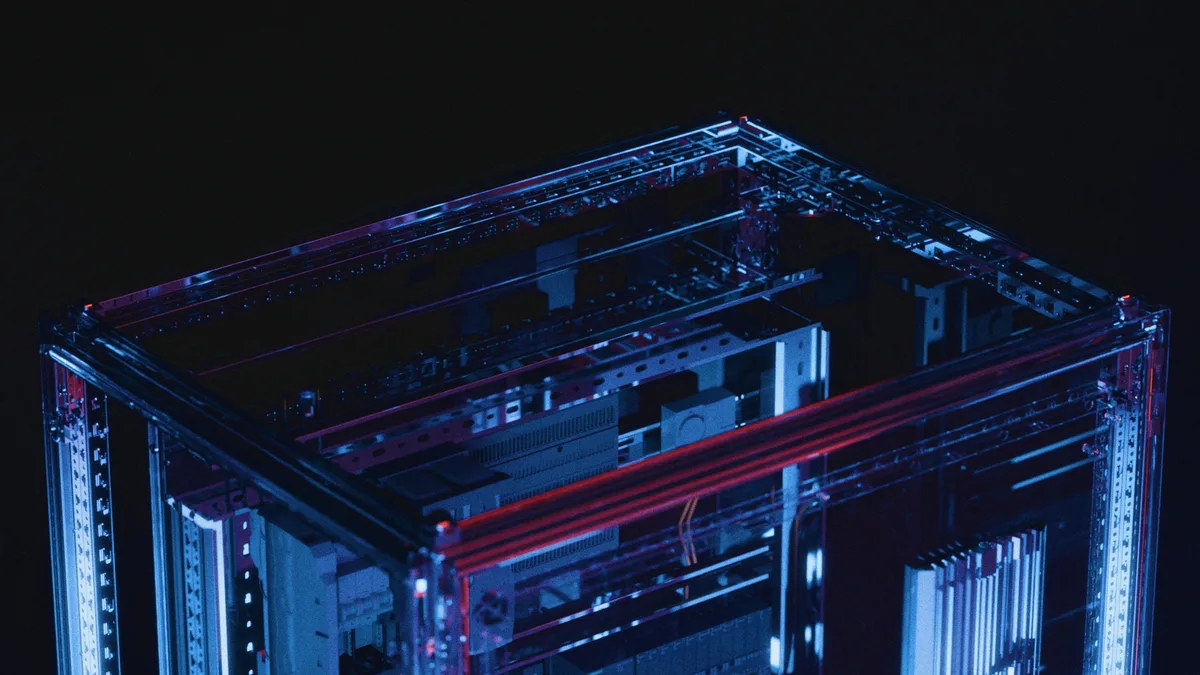
Vetaion, a Munich based startup that automates the manufacturing of custom electrical control cabinets, has closed a EUR 5.7 million pre-seed round, the company announced on 19 November. Visionaries Tomorrow and UVC Partners co-led the round, with participation from 2100 Ventures, Viessmann Generations Group and angel investors including founders and executives of Heraeus, Isar Aerospace, Flix and RobCo.
The company, founded in 2025 according to EU-Startups, will use the money to scale production in Munich and grow its team.
The problem: every cabinet is different
Every factory, wind farm or data centre needs control cabinets. They distribute and protect power, house the control system and connect hundreds of wires to motors, sensors and drives. Vetaion estimates that Europe needs more than five million of them every year, and says almost every one is custom designed and built by hand.
That has kept automation out. Because no two cabinets are alike, no fixed production sequence can be programmed, and flexible wires are hard for robots to handle compared with rigid parts, the company says. The work falls to electricians, who are getting scarcer. Vetaion says that by 2035 more than half of the EU's current experts in the field will have retired. Cabinets are also too large and heavy to ship far, so they have to be built close to where they are needed, which means a local shortage of skilled workers can stall whole infrastructure projects.
"Europe's share of global manufacturing has fallen from 25 to 16 percent in recent years," said founder Nikolaus von Bary. "If we do not bring that capability back, it will be lost for good."
How Vetaion builds them
Vetaion converts 2D circuit diagrams into 3D models. Once a cabinet exists as a 3D model, robots can take over component placement and wiring, and the company develops those robotic solutions in-house. It is also building its own operating system, VetaionOS, to run the production of one-off products.
The team sits in Garching, directly above its production floor. The company says lead times for a cabinet fall from several months to under four weeks and that manual work drops to a tenth. It promises a firm quote within 24 hours if a customer sends a PDF circuit diagram and an Excel bill of materials. These are company figures and have not been independently verified.
The team
Von Bary leads the company together with Benedikt Hohmann, a master electrician who has built control cabinets for Bosch and KUKA, among others, according to the announcement. The two bring more than 20 years of combined manufacturing experience. Lead investor UVC Partners says the wider team has more than 30 years of experience across electrical production and robotics, with backgrounds at Siemens, KUKA and Fernride.
Who is backing it
Visionaries Tomorrow is an early stage fund for industrial deep tech whose limited partners include large European industrial companies. Its portfolio includes Proxima Fusion, Hades, Arago and SirenOpt, according to UVC. UVC Partners, which works closely with the Munich innovation centre UnternehmerTUM, manages more than EUR 800 million and can invest up to EUR 10 million initially and up to EUR 40 million per company over time.
"Many people see control cabinets as a craft, not a case for venture capital. We see a problem that AI and automation can solve," said Johannes von Borries, managing partner at UVC Partners. Anna Wahl, managing director venture capital at Viessmann Generations Group, said the group wants to help make Europe's industry fit for the future and strengthen its technological sovereignty.
What it means for founders and investors
Vetaion is part of a wider push to bring physical AI and robotics into European manufacturing, alongside larger players such as Agile Robots and the Austrian mobile robot maker AGILOX, which Rockwell Automation agreed to buy this week. Its angle is narrower: one unglamorous but essential product with chronic labour shortages and demand driven by data centres, renewable energy and automation.
For founders, the round shows that investors will back hardware heavy, factory based models at pre-seed if the bottleneck is clear and the team knows the trade. Running its own factory lets Vetaion collect production data that pure software rivals would struggle to get. The risk is the usual one for manufacturing start-ups: scaling quality while automating more steps. The skills gap is not only German. In Austria, control cabinet builders are on the national list of shortage occupations for 2026, brutkasten reported. For more early stage rounds, see our startups section.
Spotted an error? Email contact@europreneursmedia.com and we'll correct it. See our corrections policy and editorial standards.