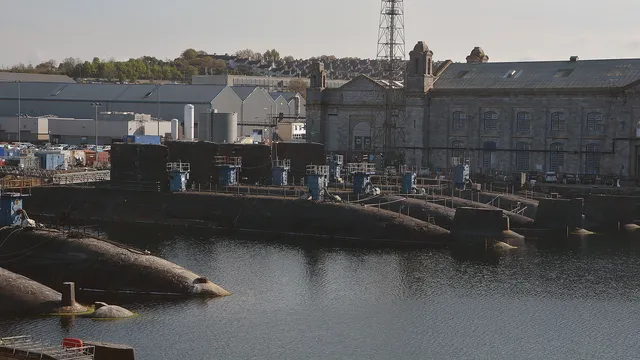
Greece's EnEarth agrees to buy Storegga's stake and lead developer role in Scotland's Acorn carbon storage project
The deal brings Acorn together with EnEarth's Prinos storage project in Greece and the Devnya project in Bulgaria. It ends uncertainty that followed Storegga's decision to sell.
EnEarth Holdings has signed a sale and purchase agreement to acquire Storegga's 30 percent working interest and lead developer status in Acorn, Scotland's flagship carbon dioxide transport and storage project, the companies announced on Monday 23 November. Storegga's management team and the dedicated Acorn staff will join EnEarth. Completion is expected by the end of 2026, subject to approvals.
Concerns had been raised about the viability of Acorn after Storegga said it planned to sell its share, the BBC reported. The price was not disclosed. EnEarth was originally set up by the energy group Energean and has since separated from it to operate as an independent company.
What Acorn is
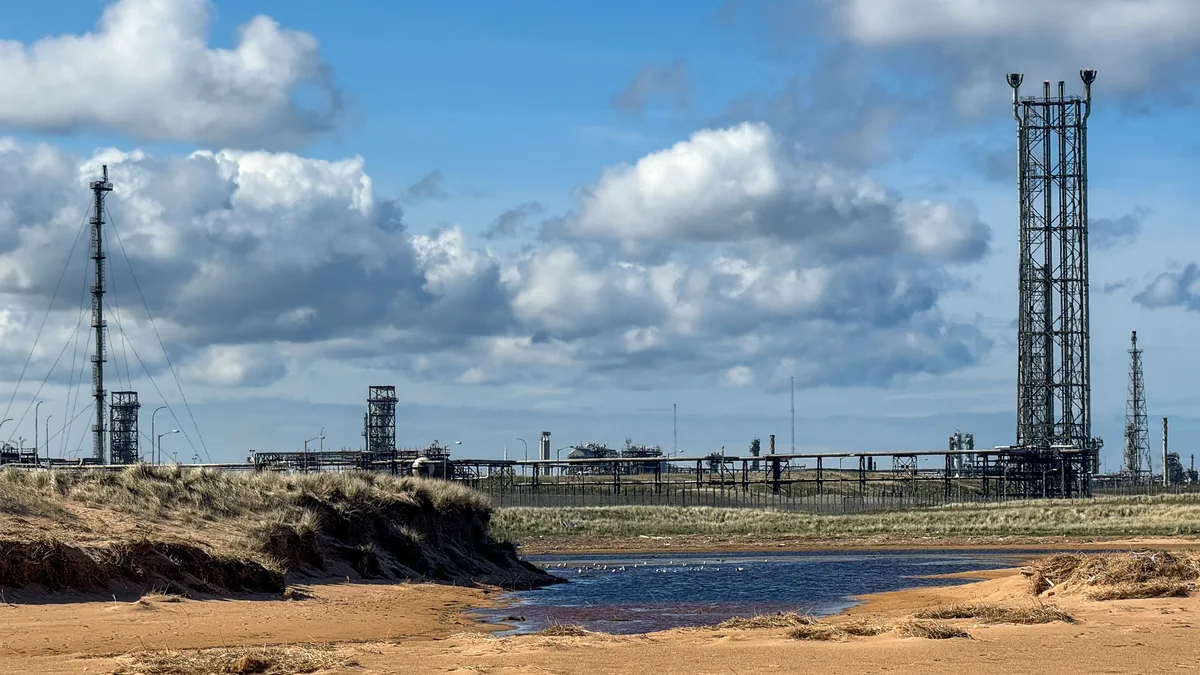
Acorn is being developed to collect CO2 from industrial emitters in the Scottish Cluster, elsewhere in the UK and in Europe, and store it permanently beneath the North Sea. It has Track-2 status in the UK government's carbon capture cluster sequencing programme. The project comprises two licensed offshore storage areas, Acorn and East Mey, with a combined estimated injection capacity of 5 to 10 million tonnes a year and more than 140 million tonnes of storage capacity, around 2.5 kilometres below the seabed off north-east Scotland, according to the EnEarth announcement.
Captured CO2 would be processed at the St Fergus terminal in Aberdeenshire, the BBC said. The original plans focused on capturing emissions at Grangemouth and Mossmorran, but the Grangemouth refinery and the Mossmorran chemical works have since closed. A new gas-fired power station at Peterhead, approved last month, is to be built so that its emissions can be captured and stored through Acorn, the broadcaster reported.
A pan-European storage group
EnEarth says the deal creates an independent European CO2 transport and storage group with more than 200 million tonnes of estimated gross storage capacity. Besides Acorn, it includes EnEarth Greece's Prinos CO2 storage project, an exclusive partnership with Heidelberg Materials to develop the Devnya transport and storage project in Bulgaria, and the CO2 shipping expertise of the Greek shipping company Prime Marine. The group plans to combine pipeline and ship transport with direct offshore injection.
Prinos holds the first and only CO2 storage permit in Southern Europe, EnEarth said. Construction is under way on its first phase, designed to store up to 1 million tonnes a year, and an expansion to 2.8 million tonnes a year targets a final investment decision in mid-2027. Prinos has secured EUR 270 million in EU and Greek public funding, and the EBRD board has approved an investment of up to EUR 75 million, according to the company.
Reactions
"Acorn is a project of strategic importance to Scotland's industrial decarbonisation and the wider European energy transition," said EnEarth chief executive Nikolas Rigas. Storegga chief executive Steve Murphy said the priority had been "to secure the right long-term home for Acorn".
UK Minister for Local Energy and Jobs Martin McCluskey called the deal an "important step forward" and said the government looks forward to seeing the new owners' plans, according to the BBC. The EnEarth release notes that the UK government recently confirmed further support for Acorn could be available, subject to a business case and further approvals.
Carbon capture remains contested. The Climate Change Committee has called carbon capture, utilisation and storage a vital part of decarbonising the UK by mid-century, while groups such as Friends of the Earth Scotland argue it is unproven and allows the oil and gas industry to continue as normal, the BBC noted.
What it means for European investors
Carbon storage is turning into cross-border infrastructure. Industrial emitters in countries without suitable geology will need to ship CO2 to storage sites elsewhere, and EnEarth is positioning itself as one of the operators that can offer both transport and storage across several countries.
For founders in carbon capture, monitoring and CO2 shipping, a consolidated owner with assets in the UK, Greece and Bulgaria could become an important customer or partner. The main risks are still policy and funding: Acorn depends on a UK business case and approvals, and Prinos's expansion awaits a final investment decision. For related coverage, see the EU deal on faster permits for grids and storage. More deals are in our funding section.
Spotted an error? Email contact@europreneursmedia.com and we'll correct it. See our corrections policy and editorial standards.