Aachen startup cylib agrees to buy BASF's battery recycling business, including the Schwarzheide black mass plant
BASF is narrowing its battery materials division to cathode active materials. The deal gives the RWTH Aachen spin-off one of Europe's large black mass plants and a foothold in the US.
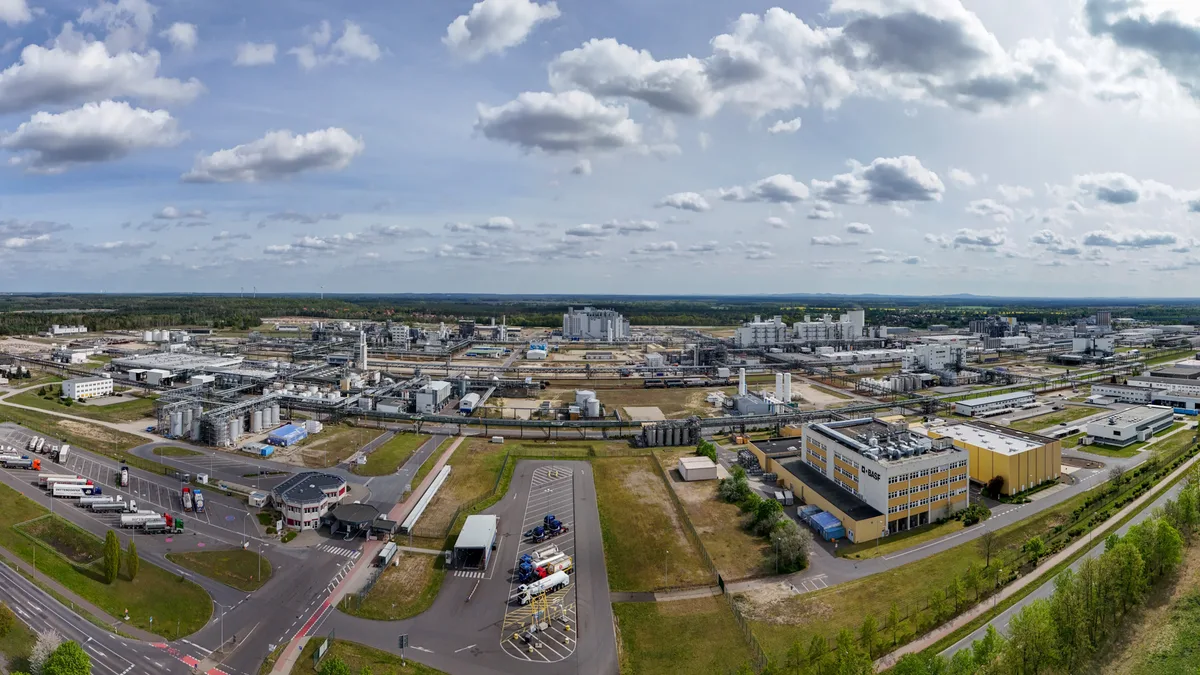
cylib, a battery recycling company founded in Aachen in 2022, has signed an agreement to acquire BASF's battery recycling business, the two companies announced on Monday 23 November. The deal covers BASF's recycling activities in Europe and North America, including intellectual property and customer and partner contracts, as well as the black mass plant and the battery recycling prototype plant in Schwarzheide, Brandenburg, according to cylib and BASF.
The agreement was signed on 20 November, BASF said. Closing is expected in the second or third quarter of 2027, subject to regulatory approval. The parties agreed not to disclose financial details.
Why BASF is selling
BASF said it will focus its Battery Materials division exclusively on cathode active materials (CAM), where it sees the strongest potential for customer value and profitable development. The move builds on a recalibration started in 2024 in response to changes in the global electric vehicle and battery markets. BASF is also looking for partners for two idle sites: its production site in Battle Creek, Michigan, and its precursor cathode active materials plant in Harjavalta, Finland, the BASF release said.
"BASF Battery Materials operates in an attractive long-term growth market that is also characterized by significant market and technology risks," said Anup Kothari, member of BASF's board of executive directors.
Handelsblatt noted that the sale comes only days after BASF withdrew its billion-euro bid for Evonik, which we covered in BASF ends pursuit of Evonik.
What cylib gets
Schwarzheide is one of the largest commercial plants in Europe for producing black mass, the powder or granulate that results from shredding used batteries and contains the valuable metals, Handelsblatt reported. When BASF announced the plant, it specified an annual processing capacity of 15,000 tonnes of EV batteries and production scrap, Battery-News reported, citing S&P Global. Operations there will continue. The transaction affects around 180 employees, according to the Mitteldeutsche Zeitung.
Beyond processing capacity, cylib gains a prototype refinery for hydrometallurgical recovery of battery metals, electrive noted. Through the North American activities, cylib also gains access to the US market and significant customer relationships there, the company said.
"We will become a heavyweight in the battery industry. The startup days are over for us," cylib co-founder Lilian Schwich told Handelsblatt. Her co-founder Gideon Schwich said cylib is one of few providers covering the whole value chain "from the used battery to the high-quality raw material".
cylib's technology
cylib emerged from research at RWTH Aachen University and was founded by Lilian Schwich, Paul Sabarny and Gideon Schwich. Its water-based OLiC process recovers lithium, graphite, nickel, cobalt and manganese, with recovery rates above 90 percent and a carbon footprint around 80 percent lower than primary extraction, according to the company. Research and development sits in Aachen, mechanical processing in Bavaria, and a hydrometallurgical plant is planned in Dormagen. Germany's Federal Agency for Breakthrough Innovation (SPRIND) took a stake in cylib on 17 November, Battery-News reported.
Until closing, BASF will continue to manage the business. Existing customer and partner relationships remain in place, both companies said.
What it means for European founders and investors
The deal reverses the usual pattern: a startup founded four years ago is buying an industrial unit from the chemicals group BASF. It shows that corporates are willing to hand non-core assets to specialised young companies when they promise scale and focus.
For Europe, battery recycling is part of the effort to keep critical raw materials such as lithium, nickel and cobalt in the region. Both companies framed the sale in those terms. For investors in climate and industrial technology, cylib now has a larger asset base and a US entry point, but also an integration task. The company has not yet said how it will combine BASF's process with its own. For more battery industry news, see Draslovka's purchase of Natron Energy's sodium-ion IP. More deals are in our funding section.
Spotted an error? Email contact@europreneursmedia.com and we'll correct it. See our corrections policy and editorial standards.