ARK Capture Solutions raises EUR 5.4 million to scale all-electric CO2 capture
The Louvain-la-Neuve company targets flue gases with 4% to 20% CO2, a segment it says solvent-based systems serve poorly. The money will take its technology from pilot units to industrial units on customer sites.
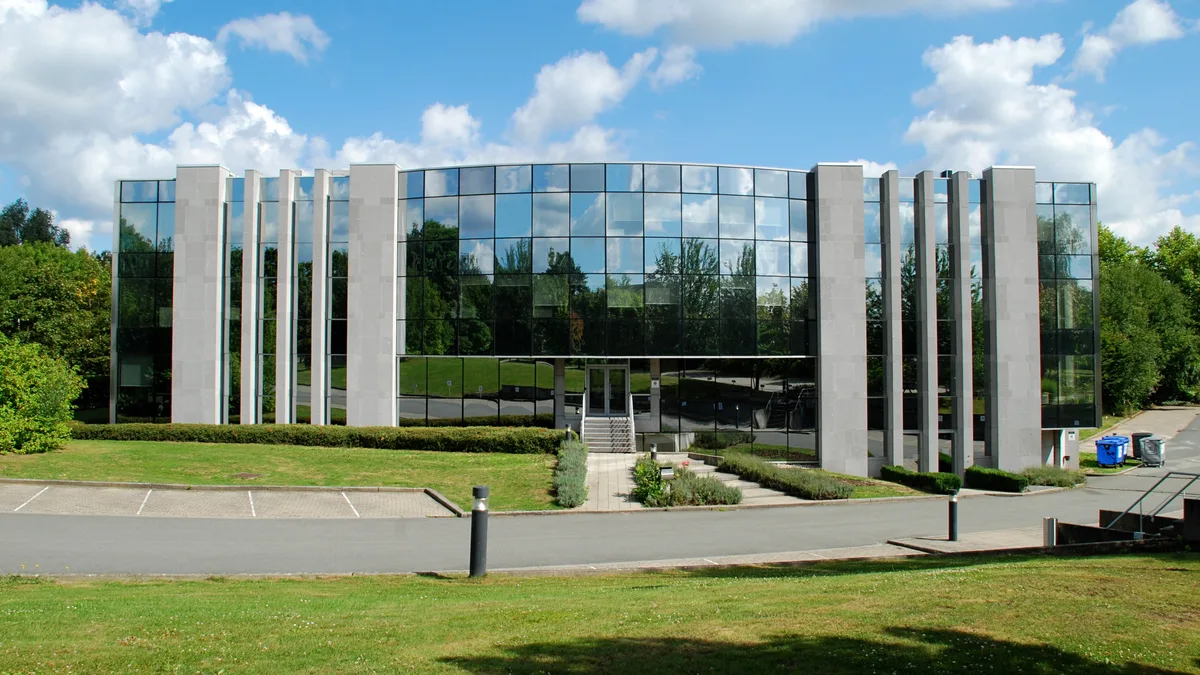
ARK Capture Solutions, a Louvain-la-Neuve start-up that builds fully electric equipment to capture CO2 from industrial flue gases, has raised more than EUR 5.4 million in a seed round led by Aperam Ventures, the venture arm of steelmaker Aperam, EU-Startups reported on Thursday 26 November.
Existing shareholders Wallonie Entreprendre, Noshaq, Invest.BW, Seeder Fund and BeAngels took part again, and Luxembourg energy group Encevo and Flemish research institute VITO joined as new investors, according to La Libre.
What ARK builds
ARK was founded in 2024 by Samuel Thiry, its chief executive, and Aurélien Vantomme, its R&D director, both engineers who previously worked at TotalEnergies. Its patented hybrid technology is solvent-free and all-electric and is designed for flue gases with CO2 concentrations between 4% and 20%. The company estimates that such gases account for around half of global industrial emissions, and says conventional solvent-based capture is too costly and complex at those concentrations.
The system captures CO2 at the source and turns it into liquid CO2. ARK targets steel, chemicals, waste-to-energy and biogas plants. Captured CO2 can be used as a feedstock for e-fuels and chemicals, or stored as carbon removal when it comes from biogenic sources such as waste incineration or biogas, Thiry told La Libre.
From pilots to commercial units
The round comes 20 months after a EUR 2.2 million pre-seed round, which Aperam Ventures also led. Since then ARK has run 30-foot container pilot units capturing about 50 tonnes of CO2 a year at three sites, including a test campaign at a large Belgian waste-to-energy plant operated by the intermunicipal company IPALLE in Thumaide, in partnership with Veolia, La Libre reported.
ARK also leads CO2 DISRUPT, a EUR 5.6 million project backed by the Walloon Region with Aperam, Industeel, Cinergie, UMONS and Certech. It will test a mobile unit with a capture capacity of 1,000 tonnes of CO2 a year at Aperam Châtelet, Industeel Charleroi and Cinergie Fleurus in the coming months.
Thiry told La Libre that ARK is close to delivering its first commercial units, in Belgium and abroad, with advanced talks in several European countries, Latin America, India and Japan. Tech Funding News noted that ARK has not yet announced a paying customer.
Who is backing it
"Aperam Ventures initially led ARK's pre-seed financing round based on confidence in the executive team and the underlying technology," said Benoit Scholtissen, head of corporate finance, M&A and ventures at Aperam. Leading the seed round "reinforces our conviction that cost-effective carbon capture solutions represent a critical component for industrial decarbonization", he said.
The founders said the round gives them the means to move to the next scale. ARK will use the money to build full industrial units, deploy them at customer sites and expand its engineering, supply chain and commercial teams. The company has 14 employees with three hires under way, and recently appointed Yesim Karaman, who spent more than 20 years at ExxonMobil, as chief commercial officer.
Why it matters
Carbon capture in Europe is moving from policy talk to projects as free allowances under the EU emissions trading system are phased out and CO2 prices rise. Most capital so far has gone to larger players: Tech Funding News points to Svante's USD 318 million round and Holcim's investment in Capsol Technologies. Storage is developing in parallel, as shown by Enearth's stake in the Acorn CO2 storage project.
What it means for European founders and investors
For climate tech founders, ARK shows the value of a corporate investor that is also a test site: Aperam provides both capital and a steel plant for the prototype. Industrial buyers want proof at scale before signing, so a host site can shorten the path to a first contract.
For investors, the key question is commercial traction. Watch for ARK's first paid units and the results of the 1,000-tonne mobile unit, which will show whether the cost advantage holds outside pilots. More start-up news is in our startups section.
Spotted an error? Email contact@europreneursmedia.com and we'll correct it. See our corrections policy and editorial standards.