Airbus sells its US satellite factory business to Cerberus and refocuses its American arm on autonomous aircraft
The Merritt Island plant was built to mass produce OneWeb satellites. Cerberus wants to turn it into an independent, US-owned spacecraft supplier, while Airbus turns its US unit towards autonomous military aviation.
US investment firm Cerberus Capital Management has signed an agreement to acquire the US Space Systems business of Airbus US Space & Defense, the American subsidiary of the European aerospace group, Cerberus announced on Tuesday 24 November. The deal is expected to close by the end of 2026, subject to customary closing conditions.
No price was disclosed, and Airbus does not break out the annual revenue of its US arm, Breaking Defense reported. Bloomberg said the sale comes as Airbus looks to focus its efforts on a European satellite joint venture.
What Cerberus is buying
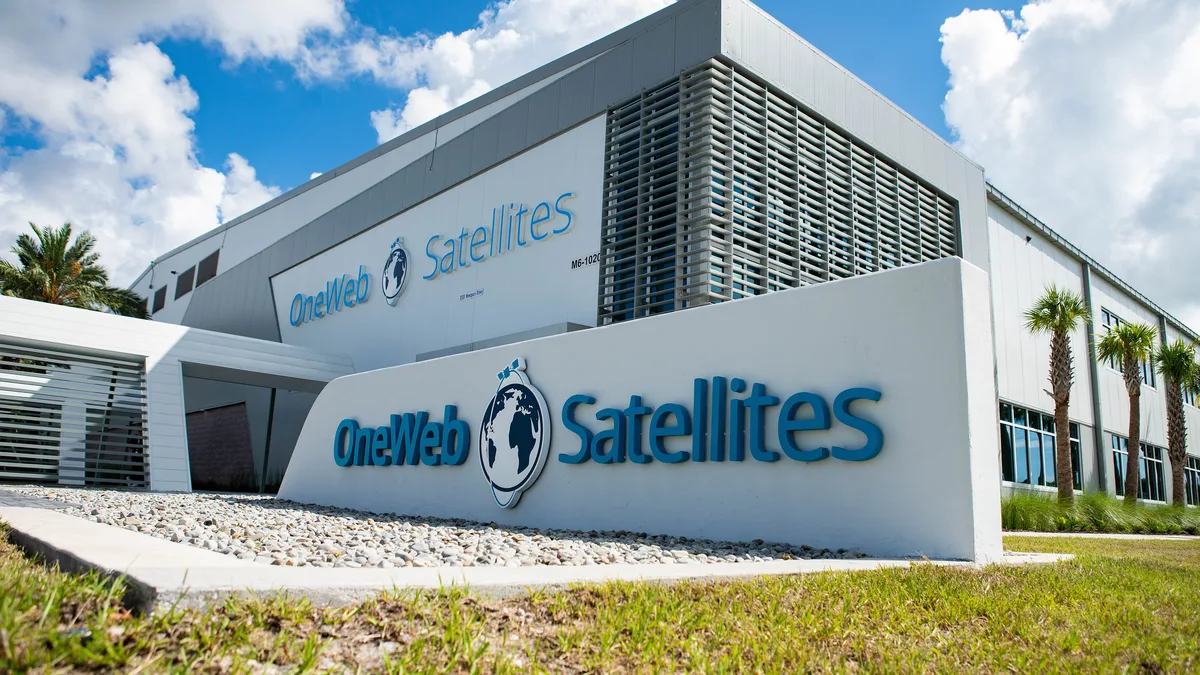
The business is headquartered in Merritt Island, Florida, and serves national security and commercial customers. It includes a production facility of about 200,000 square feet next to the Kennedy Space Center, and it has produced and launched more than 650 satellites, according to the Cerberus release. SpaceNews noted that the deal brings a factory originally built for OneWeb's broadband constellation under American ownership.
According to FlightGlobal, the site assembles the Arrow family of small satellites, including the Arrow 150 and the newer Arrow 450, which are used for proliferated low Earth orbit constellations that provide communications for defence and national security customers. The business also provides contracted geospatial intelligence services using the WorldSAR constellation of radar imaging satellites.
Cerberus's plan
Cerberus says demand for resilient, proliferated space architectures is driving the need for reliable and scalable US spacecraft production capacity. It intends to invest in the business's engineering organisation, product portfolio and US supply chain to build a leading independent, US-owned satellite platform.
The buyer is the firm's Cerberus Supply Chain strategy, a platform launched with its first dedicated fund in 2022 that has made more than two dozen investments in areas such as aerospace and defence, microelectronics and critical minerals. Cerberus as a whole manages about USD 74 billion in assets. "Space is essential to the national and economic security of the United States and allied nations," said Craig Brooks, co-head of Cerberus Supply Chain. General (Ret.) John W. "Jay" Raymond, the first Chief of Space Operations of the US Space Force and now a senior managing director at Cerberus, said dedicated US ownership and continued investment would help the business scale.
Why Airbus is selling
Airbus US Space & Defense said it will use the divestment to refocus on autonomous aviation, which it sees as more closely aligned with its core business. "As autonomous systems become increasingly central to the future of defence, this renewed strategic focus will enable Airbus US Space & Defense to strengthen its competitive position," chief executive Alex Veneziano said, as quoted by FlightGlobal and Breaking Defense.
FlightGlobal reported that Airbus is a finalist in the US Marine Corps' Aerial Logistics Connector programme with the MQ-72C, a heavily modified version of its H145-based UH-72 Lakota helicopter, with Shield AI, L3Harris and Parry Labs supplying autonomy software, avionics and integration. The US unit will not change its name immediately after the sale, an Airbus source told the publication.
In Europe, Airbus is working with Thales and Leonardo on Project Bromo, a planned combination of their satellite businesses. The venture is still in pre-notification talks with the European Commission, and the companies are targeting approval by the end of 2027, Politico reported.
What it means for European founders and investors
The deal is a clear example of how defence and space supply chains are being split along national lines. A satellite factory run by the US arm of a European group is moving to a US owner explicitly to create a "U.S.-owned" supplier, which matters for customers such as the Pentagon and the Space Force. European companies that want US defence business may increasingly need local entities, local ownership structures or partners.
For Airbus, the sale narrows the focus of its US arm and comes while its European satellite activities are being prepared for a joint venture. Investors will watch whether Airbus discloses financial terms or any impact on its accounts when it next reports.
For European space startups, the story is a reminder that manufacturing scale is a strategic asset. Constellation builders on both sides of the Atlantic are competing for production capacity, launch slots and government contracts. More European space and defence deals are in our funding and M&A section, including ICEYE's offer for Avio and our coverage of Airbus's nine-month results.
Spotted an error? Email contact@europreneursmedia.com and we'll correct it. See our corrections policy and editorial standards.