Vinci takes a majority stake in high-speed rail line operator Lisea, valuing it at EUR 2.1 billion
The French concessions group bought an additional 8.0% from the state-owned Caisse des Dépôts and now holds 50.04% of the company that operates the Sud Europe Atlantique line between Tours and Bordeaux.
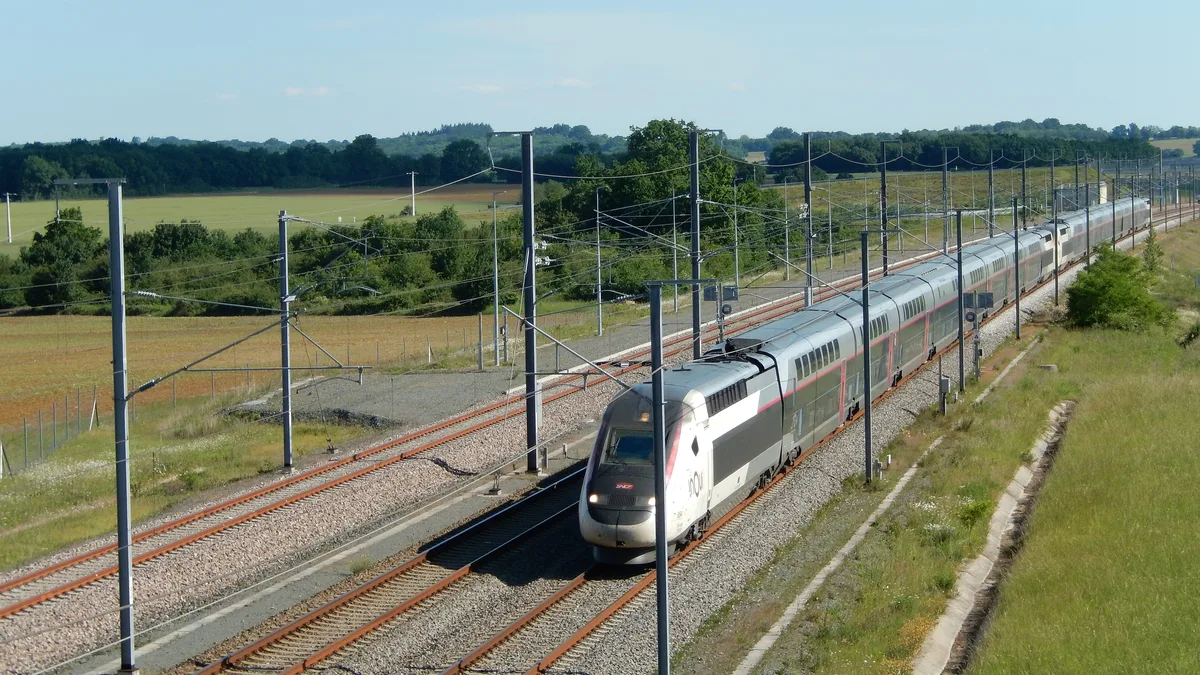
VINCI Concessions has bought an additional 8.0% of LISEA, the concession company for the Sud Europe Atlantique (SEA) high-speed rail line, as part of the sale of the stake held by the state-owned Caisse des Dépôts et Consignations (CDC), Vinci said on Wednesday 25 November in a press release. It now holds a majority of 50.04%.
The transaction values Lisea's equity at EUR 2.1 billion on a 100% basis, Vinci said. Reuters reported that Vinci had previously raised its stake to 42.045% in November 2024, which made it the largest shareholder.
The line and the deal
The LGV Sud Europe Atlantique runs between Tours and Bordeaux and opened in July 2017. Vinci said more than 175 million passengers have travelled on it since then. As concession holder, Lisea earns fees from train operators that use the line.
Vinci did not disclose the price it paid for the additional stake. Applying the EUR 2.1 billion equity value to the 8.0% stake implies roughly EUR 170 million, by our calculation. Vinci said the holding will remain equity-accounted in its financial statements, so Lisea will not be fully consolidated despite the majority stake.
Why now
Vinci said the outlook for Lisea is positive because French rail services are opening to competition. Lisea has started building what Vinci describes as the first independent maintenance and stabling site in France, in Marcheprime near Bordeaux. Delivery is planned for the end of 2027, and the site will host trains from new operator Velvet from 2028.
A tax question
The announcement also addressed a political risk. France's draft 2027 budget includes a possible increase in the tax on the operation of long-distance transport infrastructure (TEITLD). Vinci said any such increase would have a very limited impact on this specific project. Reuters reported the same point.
That matters because concession companies in France, including motorway operators, have faced repeated political debates about how much they should contribute to public finances. Investors in infrastructure value predictable rules, and by addressing the tax question in the same statement, Vinci signalled that it does not expect the budget debate to change the economics of the line.
The seller
The Caisse des Dépôts is a French public financial institution that invests in infrastructure and companies. Vinci's statement says the CDC sold its stake in Lisea; it does not say who bought the rest of that stake.
Rail competition in Europe
The opening of domestic rail markets to competition has been a long process in the EU. In France, new operators such as Velvet are preparing to compete with state-owned SNCF on high-speed routes. For a line operator like Lisea, more trains from more operators can mean more fees, provided demand holds up. Independent maintenance depots matter in this context, because a new entrant needs somewhere to service and park its trains that is not controlled by the incumbent.
Vinci is one of Europe's largest concession and construction groups, with about 294,000 employees in more than 120 countries, according to its release. Other infrastructure deals this month include ABB's agreement to buy Ziehl-Abegg in industrial equipment.
What it means for European founders and investors
For founders, the opening of rail markets creates openings for software and services: ticketing, maintenance planning, rolling stock leasing, passenger information and energy management. A new independent maintenance site for multiple operators is an example of the kind of infrastructure that competition requires.
For investors, the deal gives a fresh valuation marker for a major European rail concession and shows that long-term infrastructure owners are still adding to stakes when they can gain control. It also shows that tax policy risk in France remains a factor that companies feel they must address directly. More deals are in our funding section.
Spotted an error? Email contact@europreneursmedia.com and we'll correct it. See our corrections policy and editorial standards.