Pliant secures more than EUR 200 million in debt financing from Ascory Bank and Viola Credit to grow its card business
Weeks after a USD 80 million Series C, the Berlin based commercial card company has added three debt facilities, including a securitisation of its card receivables, to fund rising payment volumes.
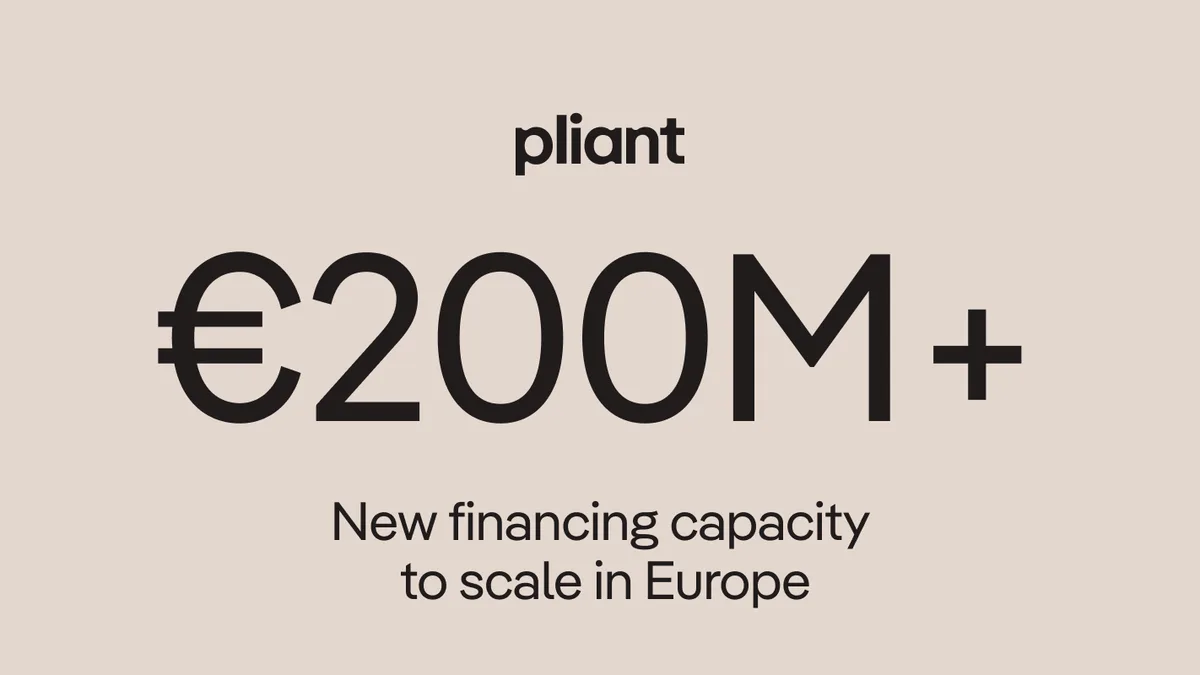
Pliant, the Berlin based B2B payments and commercial card company, has secured more than EUR 200 million in additional debt financing capacity through three transactions with Ascory Bank and Viola Credit, the company announced on Tuesday 24 November.
The facilities are meant to fund customer credit card balances and card scheme settlement collateral as payment volumes grow, and should support Pliant's European growth for at least the next two years, according to the company. Dealroom News and Alternative Credit Investor also reported the financing.
Three facilities, two lenders
Two of the facilities come from Ascory Bank, which Pliant describes as a long-standing partner. The first is a securitisation structure backed by receivables from Pliant's European corporate credit card business. The second supports the collateral Pliant has to post for Visa's card settlement process, known as the Visa Prefunding Solution, which helps the company manage the liquidity needed as transaction volumes rise.
The third transaction extends Pliant's existing growth debt facility with Viola Credit, an alternative credit manager, and includes an option to increase the financing capacity further. Pricing, maturities and the size of each facility were not disclosed, as Dealroom News pointed out.
"As our European business continues to scale, it's critical that our financing infrastructure grows alongside it," said Malte Rau, chief executive and co-founder of Pliant, in the release. He said the agreements give the company significantly greater capacity to support customers' payment needs.
Lukas Diehl, head of corporate clients at Ascory Bank, said the bank has worked with Pliant for more than six years. Elad Friedman, managing director at Viola Credit, said Pliant has emerged as the leading Europe headquartered provider of corporate credit card solutions.
Why card companies need debt
A commercial card issuer extends credit to its business customers between the moment they pay with a card and the moment they settle their bill. That gap has to be funded, and so do the collateral requirements of card schemes such as Visa. Financing that working capital with equity would be expensive and dilutive, which is why card and spend management companies increasingly use securitisations and warehouse style facilities that grow with their receivables.
Dealroom described the deal as part of a shift in B2B fintech from pure equity fuelled growth towards asset backed scaling. Pliant's financing comes shortly after its USD 80 million Series C, which is meant to fund international expansion and its payment infrastructure for AI agents. Competitors have been raising too: spend management rival Payhawk raised USD 280 million this month.
About Pliant
Founded in 2020 and headquartered in Berlin, Pliant combines commercial card issuing, payment accounts, FX and spend management in an API based platform used by businesses in travel, e-commerce, insurance and technology, as well as by fintechs, software platforms and banks that build their own card products on its infrastructure. It is a principal member of Visa and Mastercard and says it issues commercial cards in 13 currencies across 32 countries under its European e-money licence and through regulated partners in the UK and US.
What it means for European founders and investors
For fintech founders, Pliant's structure is a useful template. Once a lending or card book reaches scale and has a track record, specialist banks and private credit funds will finance it against the receivables themselves, which lets equity go into product and expansion instead of balance sheet. The trade off is that terms depend on the performance of the underlying assets, and the cost of this financing is rarely disclosed.
For investors, the deal is another sign that European private credit managers such as Viola Credit are active backers of fintech balance sheets. Debt is also playing a bigger role elsewhere in European tech, from asset backed facilities like Pliant's to venture loans such as the EIB loan for Gradyent. More fintech and funding news is in our funding section and startups section.
Spotted an error? Email contact@europreneursmedia.com and we'll correct it. See our corrections policy and editorial standards.