IntelliProve raises EUR 2.7m to take camera health scans to robots
The Ghent company reads heart rate, breathing and blood pressure from a face scan with any standard camera. The money goes to data, Class IIa certification and new devices.
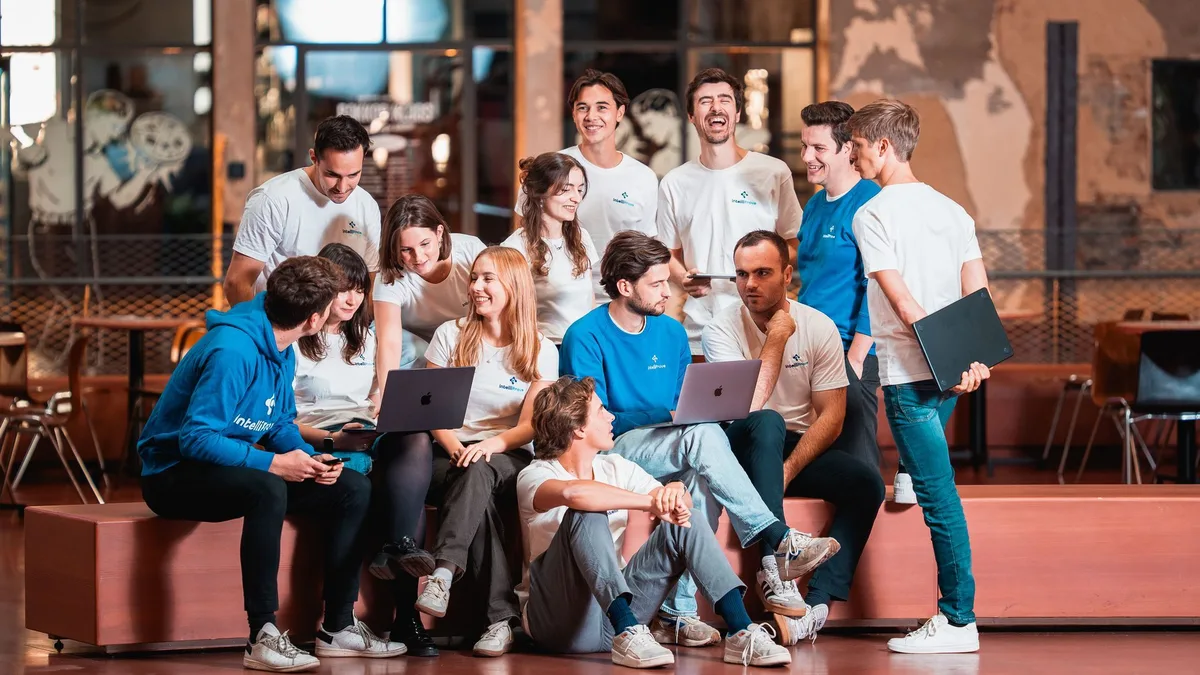
IntelliProve, a Ghent based healthtech startup whose software measures vital signs through an ordinary smartphone or laptop camera, has raised EUR 2.7 million in seed funding, the company announced on 19 November. Belgian venture fund Miles Ahead led the round, with home nursing organisation Wit-Gele Kruis (The White and Yellow Cross), imec.istart and several business angels taking part.
The company plans to use the money for more training data, better accuracy, medical device certification and a move from virtual care apps into new devices, starting with humanoid robots, EU-Startups reported.
A health check without a cuff
IntelliProve's product is a software layer that partners build into their own apps. A user looks into the camera for 30 seconds and gets six biomarkers back: heart rate, heart rate variability (HRV), respiratory rate, systolic and diastolic blood pressure, and resonant breathing. No cuff, wearable or extra device is needed, and the partner keeps its own brand.
The technique behind it is remote photoplethysmography, or rPPG. Every heartbeat changes the colour of facial skin very slightly, a change the eye cannot see but a camera can measure. IntelliProve says it has built three proprietary technologies around that signal: VitalMesh, which maps and tracks the skin as a person moves; TripleGate, a quality check that runs during the scan; and PulseShape, an in-house deep learning model that estimates blood pressure from the shape of the pulse wave.
The company says its models are validated on more than 6 million data points and that its software already runs in virtual care, health insurance and wellbeing platforms in more than 50 countries. In its own tests, 97.6 percent of heart rate readings fell within five beats per minute of a reference device, according to The Next Web, which cited the company's press kit. These are company figures and have not been independently verified.
Founders and track record
IntelliProve was founded in 2021 by Joeri Tulkens, Maxime Mattelin, Brecht Dhuyvetters and Tanguy Sanglet. It works with TU Delft, Ghent University Hospital and Wit-Gele Kruis, which is now also an investor. According to Tech Funding News, this is its third announced round, after a EUR 1 million seed in November 2022 and a EUR 1.25 million round in January 2025, which Miles Ahead also led. Miles Ahead, launched at the end of 2022, manages EUR 30 million.
"Healthcare is at a tipping point. We believe the future of health monitoring is software-first, scalable and accessible to everyone," said Tulkens, co-founder and co-CEO. "Humanoid robots are next: they are becoming very good at understanding the world around them, and the next step is helping them understand the people within that world."
Where the money goes
The company lists four areas: a broader dataset covering more skin tones, ages, lighting conditions and devices; accuracy work biomarker by biomarker against reference methods such as blood pressure cuffs and breathing belts, starting with blood pressure and HRV; clinical research towards Class IIa certification under the EU Medical Device Regulation and approvals outside Europe; and commercial growth.
Tulkens told The Next Web that roughly a third of the money goes to regulatory work, a third to research and a third to commercial growth, including robotics. IntelliProve already holds a CE mark as a Class I medical device covering its core signal acquisition engine, he said, but would not yet say which measurements the Class IIa certification will cover.
Why humanoid robots
Humanoid robots are starting to move from factories into homes and care facilities. They use cameras to see and navigate, but cannot tell how the person in front of them is doing. IntelliProve wants to supply that layer: a robot would offer a 30-second scan with the cameras it already has and pass the values to a person, who decides what happens next. The company says it already works with selected robotics partners, but did not name them. It also points to smart glasses and self-service kiosks as possible devices.
"Whether the scan runs on a smartphone or on a humanoid robot, the bar stays the same," said co-founder and CTO Sanglet.
What it means for founders and investors
The round is small, but it shows where value in European robotics may sit beyond the hardware. Investors have put large sums into robot makers this autumn, including Agile Robots' EUR 500 million round. Software that makes those machines useful in care settings is a separate opportunity, and a cheaper one to build for a seed stage company.
For healthtech founders, IntelliProve's plan is a reminder that regulation is a large share of the cost. Spending a third of a seed round on certification is not unusual in medical software, and a Class IIa mark would let the company make stronger claims than a wellbeing app can. The open questions are how accurate cuffless blood pressure readings prove to be across different people and conditions, and whether robot makers will treat health sensing as a must have or an add-on. Having a home nursing organisation as both partner and investor gives IntelliProve a direct line to real care workflows in Flanders. For more early stage rounds, see our startups section.
Spotted an error? Email contact@europreneursmedia.com and we'll correct it. See our corrections policy and editorial standards.