Crédit Agricole proposes merging its Italian bank into Banco BPM
The French group, already Banco BPM's largest shareholder, wants to combine its Italian unit with the Milan lender, lift its stake to about 45% and avoid a mandatory takeover bid.
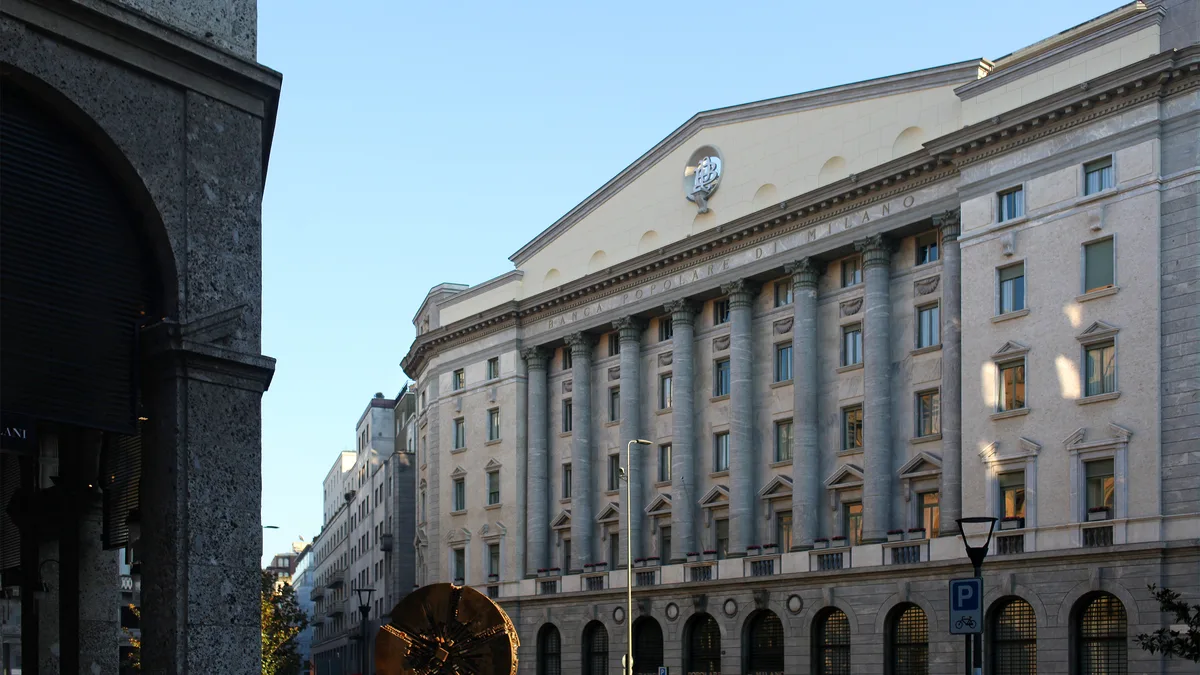
Crédit Agricole said on 9 November 2026 that it has proposed to Banco BPM to open discussions on a merger between Banco BPM and Crédit Agricole Italia. The combined bank would be built around Banco BPM, stay listed in Milan and, according to the French group, become Italy's third-largest banking group with 6.5 million customers and more than 2,300 branches.
The friendly proposal has been submitted to Banco BPM's board. It offers an exchange ratio reflecting a 20% premium plus a EUR 1 billion extraordinary dividend for current Banco BPM shareholders. Reuters, via Investing.com, and ANSA reported the same terms on Monday morning.
What Crédit Agricole is offering
Crédit Agricole already owns 29.6% of Banco BPM and is its long-standing commercial partner. Under the proposal it would contribute Crédit Agricole Italia, together with its Italian life and non-life insurance businesses, and its stake in the combined entity would rise to about 45%. The French group values the deal on earnings: the 20% premium is measured against the estimated 2027 price-to-earnings multiple used to value the businesses it would contribute.
Crédit Agricole puts pre-tax run-rate synergies at EUR 800 million a year. On that basis, and including the premium, it estimates that Banco BPM's earnings per share would rise by about 24% in 2027. The legal structure of the merger is still to be defined between the parties.
Governance designed to reassure Milan
The proposal is pitched as an Italian bank with a French anchor shareholder rather than a takeover. Banco BPM's current chief executive would be confirmed as CEO of the combined group, and the board would keep a majority of independent members. Crédit Agricole Italia brings 12,400 employees, around 1,000 branches and 2.9 million customers, according to the release.
The conditions that matter
The most important condition is the so-called whitewash. Crédit Agricole wants to cross the mandatory bid threshold without launching a tender offer for all remaining shares. That requires approval at a Banco BPM extraordinary general meeting by at least two thirds of the capital represented, and the exemption only holds if a majority of the other shareholders present, excluding Crédit Agricole and any holder above 10%, does not vote against it.
The deal would also need clearance from the European Central Bank and under Italy's golden power regime, which gives Rome a say over strategic assets including large banks. Crédit Agricole said the transaction could be completed in the second half of 2027.
Why now
The timing follows a fast-moving fortnight in Italian banking. Monte dei Paschi di Siena shareholders rejected a defence plan that had centred on acquiring Banco BPM, clearing the way for Intesa Sanpaolo's offer for MPS. Reuters reported on 5 November that Banco BPM chief executive Giuseppe Castagna told analysts a deal with Crédit Agricole was a possibility the bank would evaluate, while stressing that any transaction would need the backing of its shareholder base. Four days later, the French group has put concrete terms on the table.
What it means for European business
Cross-border bank consolidation in the euro area has mostly stalled at the level of minority stakes and failed approaches. This proposal is a different template: rather than buying a rival outright, a foreign shareholder folds its local subsidiary into a listed domestic bank and accepts that the combined group stays Italian in identity, listing and management. If Banco BPM's board engages and shareholders back the whitewash, it would show that a large European banking group can expand in another member state without a hostile bid or a fight over national champions.
For Italian small and mid-sized companies, which depend heavily on bank lending, a third large national group alongside Intesa Sanpaolo and UniCredit would keep competition in corporate lending broader than a two-bank market. For founders and investors elsewhere in Europe, the episode is a reminder that banking union is advancing through negotiated, shareholder-approved deals rather than through regulation alone. Banco BPM has not yet publicly responded. Related coverage: UniCredit's record quarter and its path to control of Commerzbank and BAWAG's ECB approval for Permanent TSB.
Spotted an error? Email contact@europreneursmedia.com and we'll correct it. See our corrections policy and editorial standards.