Volkswagen posts a €5.9 billion third-quarter operating loss and pushes its €31 billion cost plan
Writedowns on Porsche goodwill and assets in China pushed Europe's largest carmaker into a deep quarterly loss. Before special items, the nine-month operating margin was 3.8%, which the finance chief called too low to keep investing at full strength.
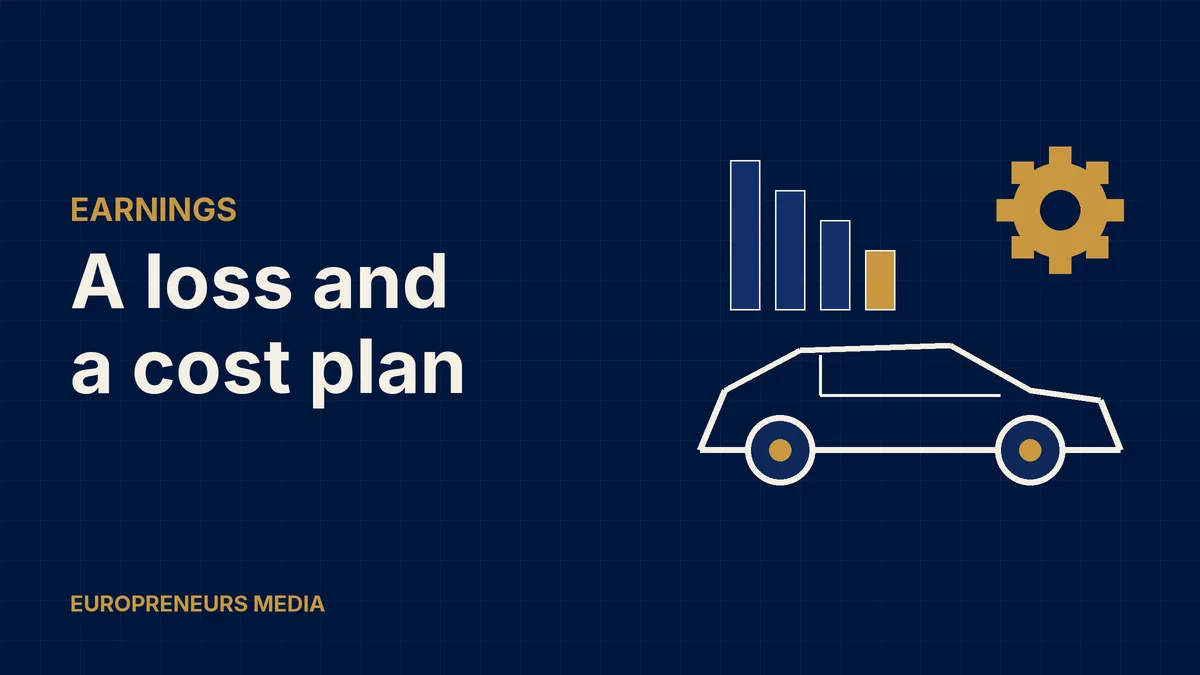
Volkswagen Group reported an operating loss of €5.9 billion for the third quarter of 2026 on 29 October. According to the company's nine-month release, the operating result for the first nine months fell to €0.1 billion from €5.4 billion a year earlier, mainly because of special items of €8.7 billion, of which €7.8 billion fell in the third quarter.
Before special items, the group earned an operating result of €8.8 billion in nine months, a margin of 3.8%. Reuters reported that analysts polled by Visible Alpha had expected a third-quarter operating loss of €2.6 billion, after a loss of €1.3 billion in the same quarter last year.
What drove the loss
The largest special item is a non-cash goodwill impairment on Porsche of €6.4 billion, according to the German-language release. Volkswagen also booked non-cash writedowns of about €1 billion on assets of fully consolidated companies in China and additional costs related to the planned sale of Volkswagen Osnabrück GmbH.
Beyond these items, the company names a weak market in China, rising price and competitive pressure worldwide and a higher share of lower-margin electric vehicles in its sales. Group sales revenue fell 2.2% to €233.4 billion in nine months. In the third quarter alone, revenue fell 6.3% to €75.3 billion, and the result after tax for nine months was a loss of €2.72 billion, compared with a profit of €3.41 billion a year earlier.
Vehicle sales fell 10.6% to 5.88 million, largely because of the Chinese joint ventures. Excluding them, sales were only about 1% lower. The workforce stood at 648,100 at the end of September, down from 662,900 at the end of 2025.
Cash flow and orders hold up
Net cash flow in the Automotive Division rose to €4.4 billion from €1.8 billion, helped by lower investment and portfolio measures. Adjusted for M&A effects it was about €3.9 billion. Net liquidity stood at €33.0 billion.
Order intake in Europe rose 4% to 3.0 million vehicles, and orders for battery electric vehicles rose 39%. The European order backlog grew 11% from the end of 2025 to about 1.1 million vehicles, of which electric cars made up around 40%. The new Electric Urban Car Family had about 150,000 orders.
"The nine-month results make one thing clear: We cannot afford to lose any time. We must act quickly and decisively," said Arno Antlitz, CFO and COO of the Volkswagen Group. He said the group earns less on electric cars than on combustion models today, and that a 3.8% margin is too low to keep investing strongly in the future.
The brand groups
Brand Group Core, which includes Volkswagen, Škoda, SEAT and CUPRA, earned €4.3 billion, a margin of 4.1%. Brand Group Progressive, led by Audi, fell 26% to €1.2 billion. Porsche, in the Sport Luxury group, earned €1.5 billion on revenue of €22.1 billion. TRATON's trucks business grew order intake 25% to 253,100 vehicles, and the software unit CARIAD grew revenue 31% to €1.3 billion while narrowing its loss.
Outlook unchanged
Volkswagen expects 2026 group revenue of around €315 billion and an operating margin of up to 1%, net cash flow in the Automotive Division of €3 billion to €6 billion and net liquidity of €32 billion to €34 billion. The company had already lowered its outlook in September, as Reuters reported at the time. The forecast excludes the effects of the Group Target Picture 2030 and the planned sale of a majority stake in Everllence.
Antlitz pointed to the "Future Plan" as the answer: a leaner model range, simpler structures, lower vehicle and overhead costs, more efficient plants and faster technology development, adding up to a cost programme of around €31 billion. According to Reuters, CEO Oliver Blume plans 100,000 job cuts across the group.
What it means for European founders and investors
Volkswagen's numbers show how expensive the shift to electric cars is for incumbents while Chinese competitors gain ground and tariffs weigh on exports. A €31 billion cost programme means fewer models, fewer suppliers and tougher price talks. For startups selling into the automotive industry, the opening is in tools that measurably cut cost, from manufacturing software and battery technology to procurement and quality automation.
The cuts also free up experienced engineers and managers across Germany, which can help young hardware and mobility companies hire. For more on the restructuring of Europe's industrial base, read our coverage of Mercedes-Benz's guidance cut, Tata Motors and Iveco and the tk accelis listing, or browse the Europe section.
Spotted an error? Email contact@europreneursmedia.com and we'll correct it. See our corrections policy and editorial standards.